
How funding rate arbitrage works today
Funding rate arbitrage is a delta-neutral strategy designed to capture periodic payments exchanged between long and short traders on perpetual futures exchanges. Unlike directional trading, this approach does not rely on price appreciation or depreciation. Instead, it profits from the mechanical rebalancing mechanism built into perpetual swap contracts.
The core mechanic is simple: when the funding rate is positive, long positions pay short positions. When it is negative, short positions pay longs. Exchanges typically settle these payments every eight hours. By holding offsetting positions in the spot and futures markets, a trader neutralizes exposure to the underlying asset's price movement, isolating the funding payment as the sole source of return.
This structure creates a yield-generating environment that functions independently of market direction. However, the strategy is not risk-free. It requires precise execution to maintain the delta-neutral balance and careful monitoring of exchange infrastructure to avoid liquidation events during high volatility.
The chart above illustrates the price action of Bitcoin against USDT on Binance. While the chart displays price and volume, the funding rate arb strategy operates in the background, collecting payments regardless of whether the line moves up or down, provided the positions remain balanced.
Key infrastructure shifts in 2026
The mechanical foundation of funding arb has changed. What used to be a game of manual execution is now a contest of infrastructure speed and capital efficiency. In 2026, the viability of a funding arb strategy depends less on finding a wide spread and more on whether your system can settle it before the spread closes.
Exchange infrastructure is shifting toward algorithmic monitoring and faster settlement layers. Manual intervention is no longer sufficient for high-frequency environments. Traders must now rely on automated systems that can detect and execute trades in milliseconds. This shift has narrowed the window for profit, making speed and reliability the primary differentiators between success and failure.
Capital efficiency is the other critical factor. With tighter spreads and faster execution, the cost of capital has become a significant drag on returns. Strategies that once relied on large, static positions are being replaced by dynamic, high-turnover approaches. This requires a deeper understanding of margin requirements, liquidation risks, and the true cost of carry.
The result is a market where only the most efficient participants thrive. Infrastructure is no longer just a back-office concern; it is the core of the trading strategy. Understanding these shifts is essential for anyone looking to maintain an edge in the funding arb space.
The landscape is evolving rapidly, and those who fail to adapt will find their strategies eroded by infrastructure improvements. The focus must shift from simply finding spreads to optimizing the entire execution pipeline.
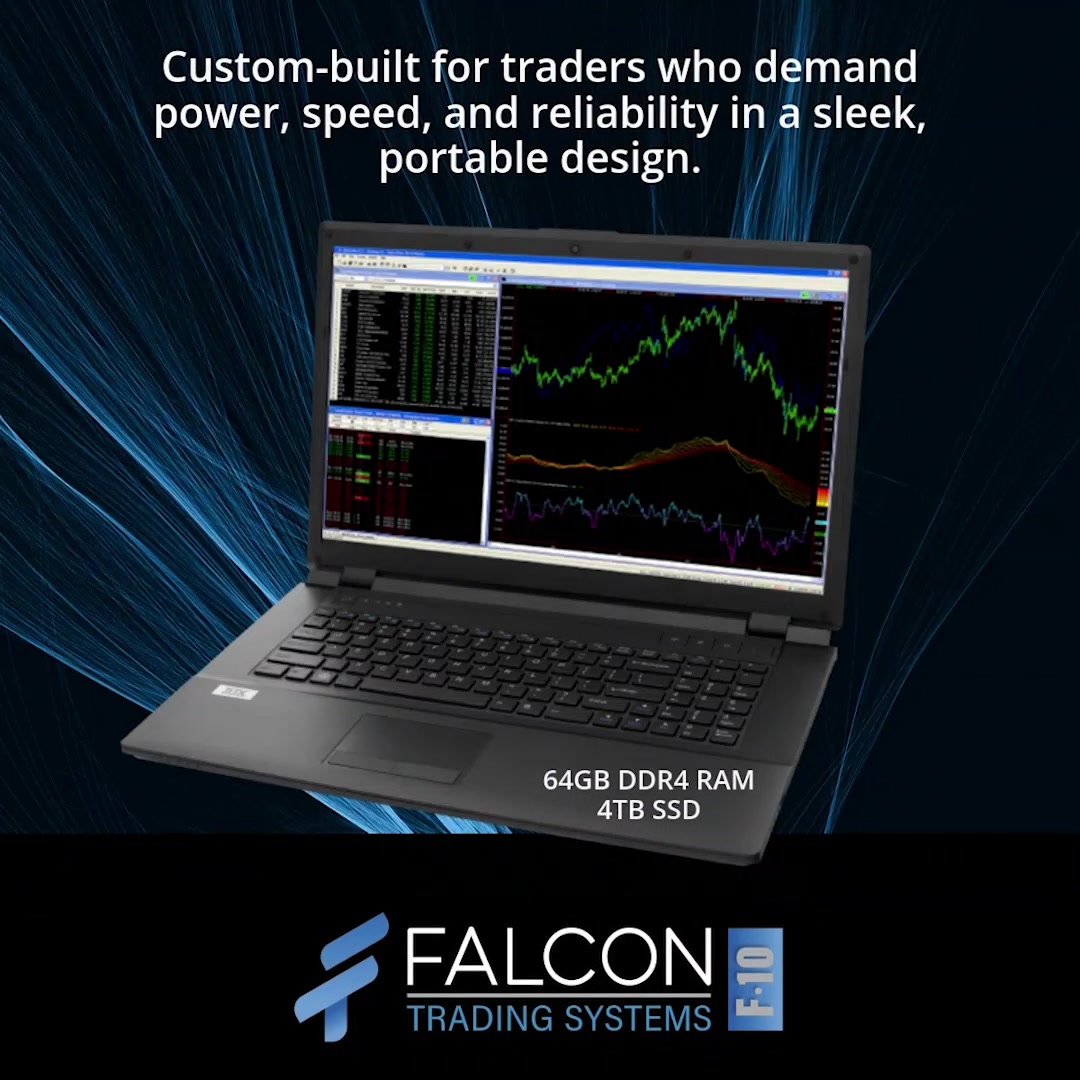


As an Amazon Associate, we may earn from qualifying purchases.
While hardware is important, the real edge comes from software and data. The ability to process information quickly and accurately is what separates the professionals from the amateurs. As infrastructure continues to improve, the bar for entry will only get higher.
Comparing funding arb tools and platforms
Choosing the right infrastructure is the difference between capturing the spread and losing it to slippage or fees. Funding arbitrage relies on thin margins, so your tooling must prioritize execution speed, data accuracy, and cost efficiency. The landscape has shifted from manual spreadsheet tracking to automated bots and dedicated scanners, each offering different trade-offs in control versus convenience.
Key platforms and their trade-offs
Perpetual exchanges like Hyperliquid and Binance dominate the volume, offering deep liquidity but often lacking native, easy-to-use arb interfaces. Specialized tools like Coinalyze or TradingView provide superior charting for identifying divergences, while dedicated scanners like those from BJT Trading Group automate the hunt for high-yield opportunities. The choice often comes down to whether you prioritize low-latency execution (direct exchange API) or analytical depth (third-party scanners).
Fee structures and data quality
Fees can easily erode the funding rate benefit. Maker fees are typically lower than taker fees, so using limit orders is crucial. Data quality is equally important; delayed funding rate data can lead to entering positions after the optimal window has closed. Always verify the source of your rate data against the official exchange documentation.
| Platform | Type | Fee Structure | Data Quality | Min. Capital |
|---|---|---|---|---|
| Hyperliquid | DEX | 0.05% maker / 0.10% taker | Real-time on-chain | Variable (low) |
| Binance | CEX | 0.02% maker / 0.04% taker | High (official API) | $10+ per position |
| Coinalyze | Scanner | Free tier / Premium | Aggregated (slight delay) | N/A (tool only) |
| BJT Trading | Scanner | Subscription-based | High (live feeds) | N/A (tool only) |
The live Bitcoin price above contextualizes the scale of capital often required. While you can start small, the absolute returns from funding arb scale with position size. Ensure your platform supports the leverage you need without excessive liquidation risk, and always test with small amounts before scaling up.
Execution risks and hedging mechanics
Funding rate arbitrage is often marketed as a risk-free yield strategy, but that label ignores the infrastructure realities of crypto markets. While the academic literature confirms that the strategy can generate positive risk-adjusted returns, it also highlights that these returns are heavily dependent on the stability of the underlying exchanges and the precision of the hedge. When the market moves violently or an exchange faces liquidity issues, the "risk-free" premise collapses.
Basis risk and rate flips
The core of this strategy relies on the convergence of the futures price and the spot price. Basis risk emerges when this convergence fails, often due to extreme market volatility or low liquidity in the derivatives market. More insidious is rate flip risk: the moment the funding rate turns negative, your short futures position begins paying funding to longs instead of receiving it. This can happen suddenly during market downturns, turning a steady income stream into a liability.
Exchange solvency and counterparty risk
In traditional finance, clearinghouses and central counterparties mitigate counterparty risk. In crypto, you are often exposed directly to the exchange. Solvency issues, such as those seen in historical exchange failures, represent an existential threat to the arbitrageur. If the exchange holding your collateral freezes withdrawals or declares bankruptcy, the hedge becomes worthless. This is not a theoretical edge case; it is a primary reason why institutional players demand rigorous due diligence on exchange reserves and proof of solvency before deploying capital.
Hedging mechanics and verification
To mitigate these risks, traders must maintain a dynamic hedge ratio. This involves constantly monitoring the spot and futures prices to ensure the short position remains perfectly aligned with the long spot position. Any deviation creates directional exposure, which defeats the purpose of the arbitrage. Additionally, traders should diversify across multiple reputable exchanges to avoid single-point-of-failure risk. Regular audits of exchange reserves and monitoring of on-chain data can provide early warnings of solvency issues.
The current market environment requires constant vigilance. Monitoring live data helps identify when basis spreads widen abnormally or when funding rates begin to deviate from historical norms. This data-driven approach is essential for identifying when to adjust positions or exit trades entirely to preserve capital.
Frequently asked questions about funding arb
Is funding rate arbitrage legal?
Yes. Funding rate arbitrage is a legal trading strategy executed on cryptocurrency exchanges. Unlike market manipulation, it involves taking offsetting positions in spot and perpetual futures markets to capture the funding payments exchanged between long and short traders. However, you must comply with the terms of service of the specific exchange you use and adhere to local tax regulations regarding capital gains or income from these payments.
How do I calculate the funding rate?
The funding rate is calculated based on the difference between the perpetual contract price and the underlying spot index price. If the perpetual price is higher than the spot price, longs pay shorts; if lower, shorts pay longs. The formula typically involves the premium index and a standard interest rate component, updated every 8 hours on most major exchanges. You can monitor these live rates using data-driven tools or exchange dashboards to identify profitable spreads.
Does crypto arbitrage still work in 2026?
Yes, but the landscape has shifted. As infrastructure matures and more institutional capital enters the market, funding rate spreads have generally narrowed compared to earlier years. Success now relies on data-driven strategy and speed rather than simple passive holding. Traders must account for higher transaction fees, slippage, and the need for efficient execution to maintain profitability in a more competitive environment.
What are the three main types of arbitrage?
While funding rate arbitrage is specific to perpetual futures, the broader category includes spatial arbitrage (buying on one exchange and selling on another), triangular arbitrage (trading between three currency pairs), and statistical arbitrage (using quantitative models to exploit pricing inefficiencies). Funding rate arbitrage is often preferred for its delta-neutral nature, as it hedges directional risk while capturing the funding payment.
No comments yet. Be the first to share your thoughts!