The reality of funding arb limits to account for
Funding rate arbitrage remains a viable strategy in 2026, but the landscape has shifted dramatically. What once offered easy, risk-free yields now demands rigorous infrastructure and real-time analysis. The era of simple price gaps is over; today’s opportunities are smaller, more competitive, and heavily influenced by automation.
The core mechanism is straightforward: you buy the asset on the spot market and short it on the perpetual futures market. This delta-neutral setup eliminates directional price risk, allowing you to collect funding payments when the rate is positive. However, the profit comes from the funding rate differential, not price movement. If the funding rate drops or turns negative, your strategy loses money.
Execution quality is now the primary differentiator. High-frequency trading bots and institutional players have narrowed the spreads, meaning manual traders often struggle to compete. Consistent profitability depends on low fees, reliable data feeds, and the ability to react to market shifts in milliseconds. Without robust infrastructure, the costs of trading can easily erase the funding payments you’re trying to capture.
The key constraint is not just finding the arbitrage opportunity, but sustaining it. Market efficiency means that obvious gaps close quickly. To stay profitable, you need access to deep liquidity across multiple exchanges and the technical capability to manage positions across spot and derivatives markets simultaneously. This is no longer a passive income strategy; it is an active, infrastructure-heavy operation.
Funding arb choices that change the plan
Funding rate arbitrage is delta-neutral, but "neutral" only applies to price direction. You are still exposed to structural risks that can erode or eliminate your yield. In 2026, execution quality and infrastructure reliability matter more than raw rate differentials. The gap between theoretical profit and actual take-home return depends on how you manage these specific tradeoffs.
The following table breaks down the concrete factors you must evaluate before deploying capital. Each column represents a distinct risk vector that interacts with your strategy's profitability.
| Factor | Primary Risk | Mitigation | Impact on Yield |
|---|---|---|---|
| Exchange Counterparty | Platform insolvency or withdrawal holds | Diversify across 2-3 reputable venues | Total loss of principal |
| Funding Rate Volatility | Rate flips negative during position hold | Monitor real-time feeds; use alerts | Reduces or reverses profit |
| Execution Slippage | Spot and leg prices diverge at entry | Use limit orders; avoid market orders | 1-5% initial capital drag |
| Withdrawal Fees | Network congestion or high gas costs | Batch withdrawals; choose L2s | 2-10% of annualized yield |
| Liquidation Risk | Margin call on perpetual leg due to spike | Maintain high margin ratio (>200%) | Forced close at loss |
| Opportunity Cost | Capital locked during low-rate periods | Rotate to highest-yielding pairs | Lower overall IRR |
Counterparty risk is the silent killer. Unlike traditional finance, crypto exchanges are not FDIC-insured. If the venue holding your spot assets experiences an outage or insolvency event, your arbitrage position collapses regardless of the funding rate. Diversifying across multiple platforms reduces this exposure but increases operational complexity.
Funding rate volatility requires active monitoring. Rates can flip from positive to negative in minutes during extreme market moves. If you are shorting perps and the rate turns negative, you start paying longs instead of receiving payments. Real-time data feeds and automated alerts are non-negotiable for managing this risk.
Execution slippage eats into margins. Entering a delta-neutral position requires buying spot and selling perps simultaneously. If prices move between these two actions, you enter with an immediate unrealized loss. Using limit orders and avoiding market orders during high volatility preserves your edge.
Choose the next step
Funding rate arbitrage remains viable in 2026, but the margin for error has vanished. Automated bots have compressed simple price gaps, meaning consistent profitability now depends on execution quality, low fees, and access to reliable trading infrastructure. You are no longer hunting for obvious mispricings; you are managing a delta-neutral spread. To make money arbitrage in this environment, you must treat your positions like a precision instrument rather than a speculative bet.
The core mechanic is straightforward: you buy the asset on the spot market and short the same asset in equal size on the perpetual futures market. This hedges your directional exposure to price movements. Your profit comes entirely from the funding rate differential. If the funding rate is positive, shorts pay longs, and you collect the payment. If it is negative, you pay, eroding your margin. Therefore, selecting the right pairs and timing your entry is more critical than ever.
Before deploying capital, run your target assets through this four-step decision framework. This checklist filters out noise and highlights opportunities where the risk-adjusted return justifies the operational complexity.
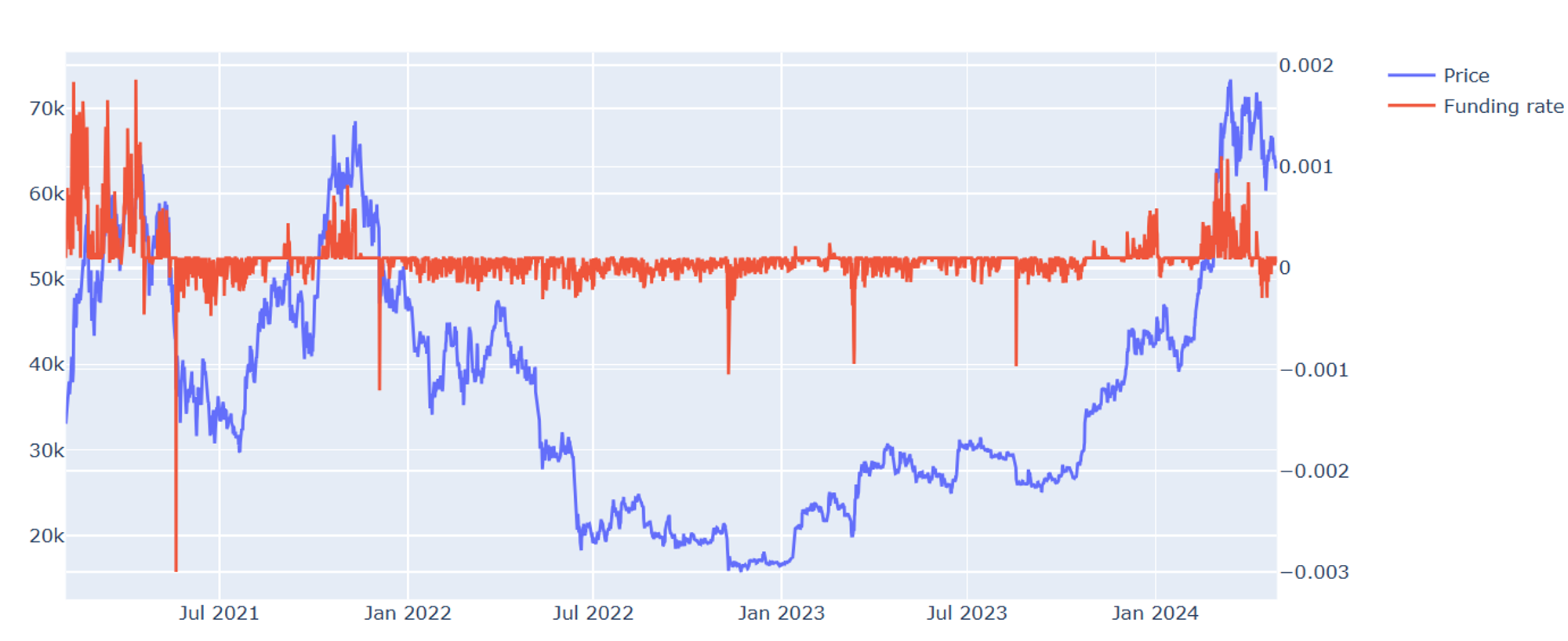
Check the current funding rate on your target exchange. Positive rates indicate a bullish bias where longs pay shorts—ideal for your strategy. Look for sustained positive rates over multiple intervals, not just a single spike. A rate of 0.01% per 8 hours is far more valuable than a transient 0.1% spike that reverses quickly.
Annualize the funding rate to understand the true return on capital. Multiply the periodic rate by the number of periods in a year (usually 3 for 8-hour intervals). Subtract your estimated trading fees, including the spread cost, withdrawal fees, and exchange maker/taker fees. Only proceed if the net yield exceeds your required threshold after all costs.
Even in a delta-neutral strategy, exchange liquidation is a real threat. Ensure your short position has sufficient margin to withstand extreme volatility. Check the basis (the difference between spot and futures price). A widening basis can indicate growing market stress or liquidity issues, which may increase funding volatility.
Decide whether to execute manually or use a bot. Manual execution allows for precise fee negotiation and pair selection but is slow. Bots can capture fleeting opportunities but require robust infrastructure and monitoring. For most traders in 2026, a hybrid approach—using bots for monitoring and manual execution for large positions—offers the best balance of speed and control.
| Method | Speed | Control | Cost |
|---|---|---|---|
| Manual | Slow | High | Low |
| Bot | Fast | Low | High |
| Hybrid | Medium | Medium | Medium |


As an Amazon Associate, we may earn from qualifying purchases.
Watch for Weak Funding Arb Options
Not all funding rate arbitrage opportunities are created equal. Many traders chase high yields without checking the infrastructure behind them. In 2026, automation and market efficiency have narrowed simple price gaps, making execution quality the difference between profit and loss.
Misleading Yield Claims
Some platforms advertise unrealistic annual percentage yields (APY) on funding strategies. These numbers often ignore slippage, trading fees, or the risk of negative funding periods. Always verify if the yield is net of all costs and whether it accounts for the volatility of the funding rate itself.
Poor Liquidity on Exchanges
Funding arbitrage requires large positions to be profitable. If the order book on a specific exchange is thin, your entry and exit will suffer from slippage. This can erase the funding income you collect. Stick to major exchanges with deep liquidity for the assets you are trading.
Ignoring Counterparty Risk
Holding spot assets on one exchange and shorts on another exposes you to exchange-specific risks. If one platform freezes withdrawals or faces technical issues, you may be unable to close your position or collect funding. Diversifying across reputable, regulated platforms can mitigate this risk.
High-Frequency Trading Costs
Funding payments occur every 8 hours on many platforms. If you are not using automated tools, the manual effort and potential for missed payments can be significant. Additionally, frequent rebalancing to maintain delta-neutrality can incur transaction fees that outweigh the funding income.
Funding arb: what to check next
Before deploying capital, it helps to separate the mechanics of the strategy from the reality of execution. Funding rate arbitrage is not a passive income stream; it is a precision operation that relies on infrastructure and speed.
No comments yet. Be the first to share your thoughts!