Funding rate arbitrage limits to account for
Funding rate arbitrage is a delta-neutral strategy that captures periodic funding payments exchanged between long and short traders on perpetual futures contracts. The premise is straightforward: when the funding rate is positive, longs pay shorts. By holding a short position on the exchange and a corresponding long position in the spot market, you collect these payments while hedging away directional price risk. This structure creates a yield stream that can outperform traditional fixed-income assets during bullish market cycles.
However, the strategy is not without friction. The primary constraint is not market direction, but operational efficiency and counterparty risk. Profitability hinges on the spread between the funding rate and the cost of capital, trading fees, and the efficiency of your hedge. If the cost to borrow or the spread between spot and futures prices widens, the arbitrage window closes or turns negative.
The Real Cost of Capital
Many traders overlook the true cost of executing the hedge. You are not just paying trading fees; you are paying the opportunity cost of locked capital and potential funding rates on the spot side if you borrow assets to create the hedge. In 2026, with more sophisticated market makers and automated arbitrage bots, the easy, high-yield opportunities have narrowed. The "free lunch" of pure arbitrage has largely been arbitraged away, leaving only small, fleeting edges for those with low fee tiers and fast execution.
Execution Risk and Slippage
Delta-neutrality requires precise balancing. If your spot and futures positions are not perfectly correlated or sized correctly, you introduce directional risk. A sudden market move can leave you under-hedged, exposing your capital to losses that may exceed the funding payments collected. Also, exchange downtime, withdrawal delays, or smart contract failures in DeFi-based arbitrage can trap capital during critical moments, turning a theoretical profit into a realized loss.
Regulatory and Counterparty Exposure
Unlike traditional finance, crypto arbitrage often involves holding assets on centralized exchanges. This introduces counterparty risk: if an exchange freezes withdrawals or experiences a hack, your hedged position becomes unhedged. Additionally, regulatory scrutiny in key jurisdictions like the USA has increased compliance requirements. While arbitrage itself is not illegal, the infrastructure supporting it faces evolving rules that can impact liquidity and access.
When It Makes Sense
Funding rate arbitrage works best in markets with high volatility and strong trending sentiment, where funding rates spike. It is less effective in sideways or bearish markets where rates are low or negative. Traders must continuously monitor rates, fees, and hedge ratios to ensure the strategy remains profitable. It is a tool for capital efficiency, not a passive income source. Success requires active management, low-cost infrastructure, and a clear understanding of the risks involved.
Funding arb choices that change the plan
Capital efficiency in funding arbitrage hinges on balancing yield against execution friction. The strategy captures periodic funding payments by maintaining a delta-neutral position, but the net return depends entirely on how well you manage the spread between the funding rate and your trading costs. Before deploying capital, you must evaluate the specific infrastructure and tools that define your edge.
The following comparison breaks down the primary tradeoffs across three common execution methods. This framework helps you decide which approach aligns with your capital size and risk tolerance.
| Method | Capital Efficiency | Primary Risk | Operational Complexity |
|---|---|---|---|
| CEX Perpetuals | High | Exchange counterparty & liquidation | Low |
| DEX Aggregators | Medium | Smart contract & MEV | Medium |
| Cross-Exchange Spot/Futures | Low | Transfer latency & basis drift | High |
Choosing the right method requires looking beyond the headline funding rate. CEX perpetuals offer the highest capital efficiency due to leverage, but they introduce counterparty risk and potential liquidation events if the basis widens unfavorably. DEX-based strategies reduce counterparty risk but often suffer from lower liquidity and higher gas fees, which can erode margins. Cross-exchange arbitrage is robust against single-point failures but ties up capital during transfers, reducing overall efficiency.
To understand the current market conditions, observe the live price action of Bitcoin. Volatility often drives funding rates higher, creating wider windows for arbitrage, but it also increases the risk of temporary basis divergence.
While crypto-specific charts are ideal, monitoring broader market sentiment through major indices can provide context for systemic liquidity shifts that impact funding rates across all assets. Use this data to time entries when funding rates are elevated relative to historical averages.
Choose the next step
Funding rate arbitrage works because the perpetual swap market pays a premium to keep futures prices anchored to spot. You capture that premium by holding a long spot position and a short futures position. The strategy is delta-neutral, meaning price movements in the underlying asset cancel out. Your profit comes from the funding rate itself, not from betting on the asset's direction.
The decision framework below maps this strategy to specific market conditions. Use the comparison table to weigh the tradeoffs between holding spot and using leverage. Then, follow the step-by-step execution guide to structure your positions correctly.
Market conditions and strategy fit
| Strategy Type | Best Market Condition | Primary Risk | Capital Efficiency |
|---|---|---|---|
| Spot + Futures | High positive funding rates | Exchange counterparty risk | Low (1:1 ratio) |
| Leveraged Spot | Rising funding with low volatility | Liquidation if price spikes | High (2x-5x) |
| Futures Only | Negative funding (short squeeze) | Basis risk expansion | Medium |
Execution steps
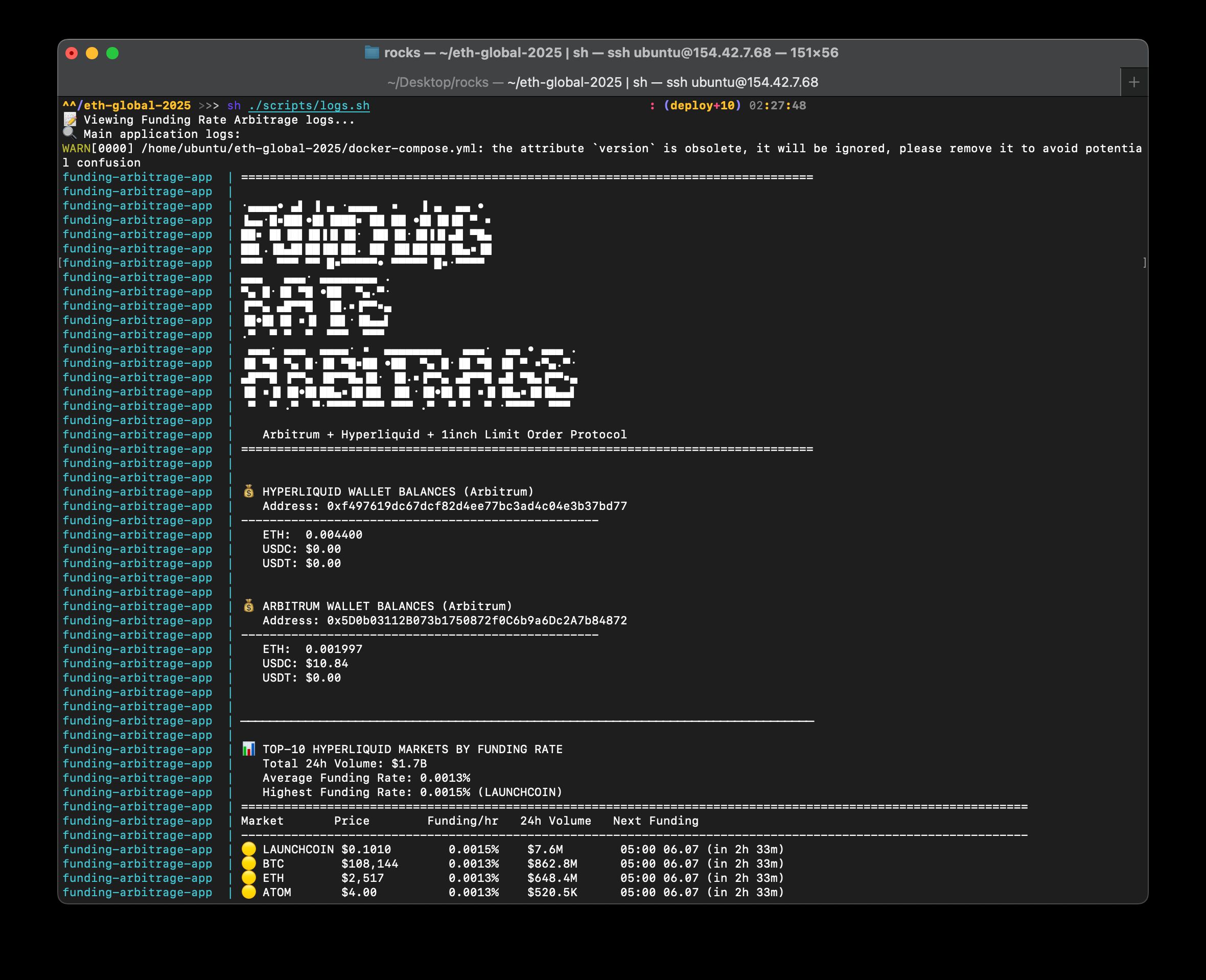
Check the current funding rate on your target exchange. Look for rates significantly above the annualized risk-free rate. Positive rates indicate longs are paying shorts. Use a data aggregator like Amberdata or Coinglass to track historical averages and identify anomalies.
Open a short position on a perpetual swap contract. The notional value should match your spot holding to remain delta-neutral. Ensure the contract has sufficient liquidity to avoid slippage when closing or rolling positions.
Purchase the equivalent amount of the underlying asset on the spot market. This balances the delta exposure. You now own the asset and owe the futures contract, isolating you from price direction and exposing you only to the funding payment.
Funding rates reset every 8 hours. Monitor your account for payments. When the rate drops or becomes negative, consider closing the position or rolling to a new contract. Always account for trading fees and withdrawal costs in your profit calculation.
Key takeaways
Spotting Weak Options and Misleading Claims
The 2026 funding arbitrage landscape is crowded with platforms promising "risk-free" yields. Most of these claims ignore the hidden costs of capital efficiency. Before committing capital, you must distinguish between genuine market inefficiencies and structural traps.
The Myth of Zero Risk
Many tools advertise delta-neutrality while ignoring basis risk. If the perpetual contract premium widens unexpectedly, your hedge fails. Check whether the platform provides real-time basis monitoring or just static funding rates. A platform that ignores spread volatility is offering a false sense of security.
Hidden Fees and Slippage
High-frequency arbitrage requires low-latency execution. Platforms with poor liquidity or high maker-taker spreads will eat your profits. Look for explicit fee structures. Avoid tools that hide costs in "withdrawal fees" or "maintenance margins." These are often red flags for weak infrastructure.
Data Latency Traps
Some dashboards show funding rates with a 5-minute delay. In 2026, this lag is fatal. You need real-time data feeds. If a tool relies on aggregated, delayed data, it is already behind the market. Prioritize platforms with direct exchange API connections.
The Decision
Ignore any option that does not provide transparent fee structures, real-time data, and clear risk metrics. The best tools are boring: they show you the costs, the latency, and the actual basis spread without hype.
Funding arbitrage: what to check next
Funding rate arbitrage profits from the periodic payments long and short traders exchange on perpetual futures. The strategy remains delta-neutral by holding offsetting spot and futures positions, capturing the funding rate as yield. While the mechanics are straightforward, execution requires careful attention to exchange fees, slippage, and the risk of liquidation if the hedge fails.
Helpful gear
Use these product recommendations as a starting point, then choose the size, material, and price point that fit how you actually use the gear.



As an Amazon Associate, we may earn from qualifying purchases.
No comments yet. Be the first to share your thoughts!