Spot the L2 funding opportunity
Finding a viable funding arb trade on Layer-2 networks starts with data, not intuition. You are looking for a persistent divergence where long positions pay shorts, signaling bullish sentiment that hasn't yet been priced into the underlying asset's spot value. The goal is to isolate assets with high, sustainable rates rather than chasing temporary spikes that vanish once the market rebalances.
Use dedicated tracking platforms like Amberdata or Sharpe to monitor real-time funding rates across major L2s such as Arbitrum and Optimism. Look for assets that consistently rank in the top tier for positive funding rates over a 24-48 hour window. A single spike might be noise; a sustained trend indicates a structural imbalance between long and short leverage that your arbitrage strategy can exploit.
Distinguish between organic demand and artificial manipulation. If a coin's price is stagnant while funding rates skyrocket, it often suggests short squeezes or speculative frenzy rather than genuine long-term bullishness. Conversely, steady rates paired with moderate volume increases are the sweet spot. This balance suggests that traders are willing to pay a premium to hold long positions without the immediate risk of a violent correction.
Always verify the source of the rate. Some newer L2s or smaller tokens may display inflated rates due to low liquidity or manipulated order books. Stick to established Layer-2 ecosystems with deep liquidity pools to ensure that the funding payments you collect are reliable and not offset by slippage or execution risks during your hedge.
Set up the delta-neutral position
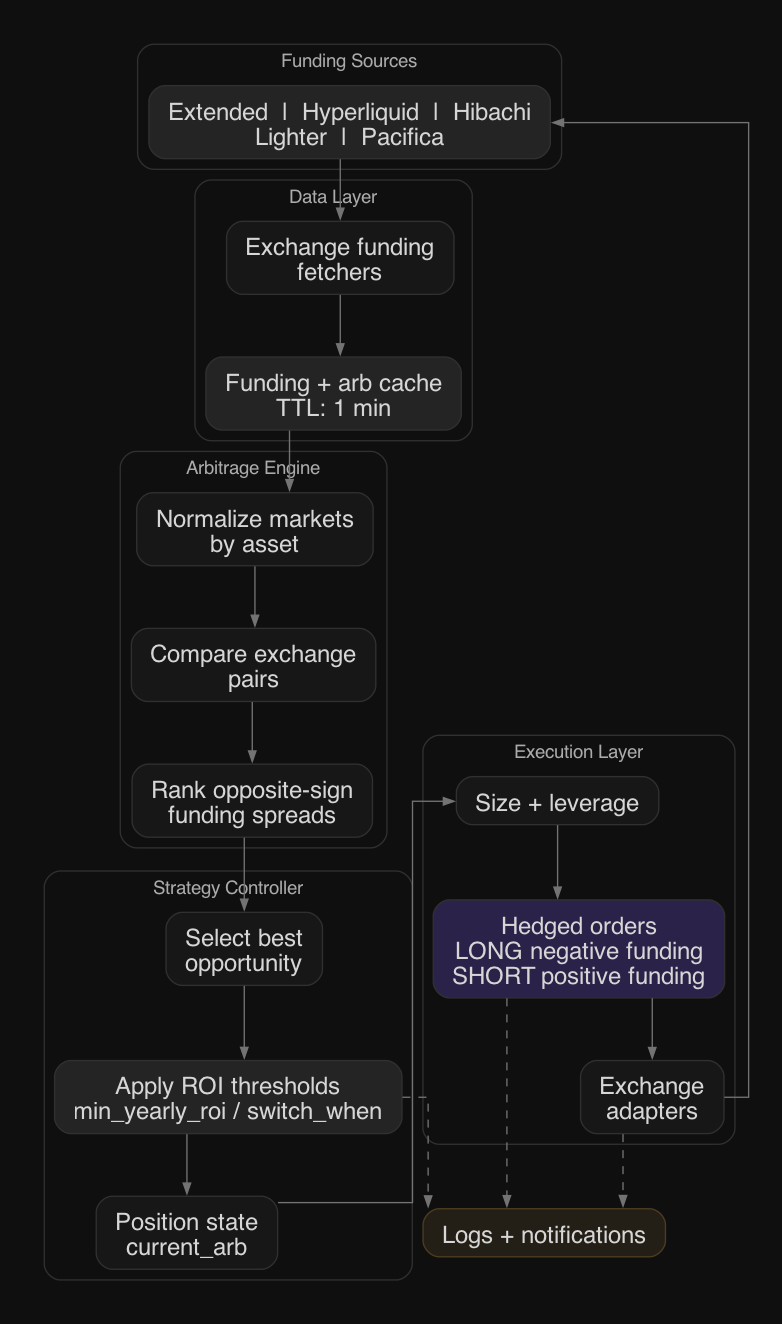
To execute a funding arb trade on Layer-2 networks, you need to neutralize your exposure to price movements. The goal is to profit from the funding rate payments rather than betting on whether the asset price goes up or down. You achieve this by holding a long spot position on the L2 and simultaneously opening an equivalent short position on a perpetual futures contract.
This structure ensures that if the price of the underlying asset moves, your gains in one leg are offset by losses in the other. Your net profit comes entirely from the periodic funding payments exchanged between long and short traders on the exchange. On Hyperliquid and similar platforms, if the funding rate is positive, shorts receive payments from longs. If it is negative, the flow reverses. For this strategy to work, you need a market where the funding rate is consistently positive, allowing your short perp position to generate steady income.
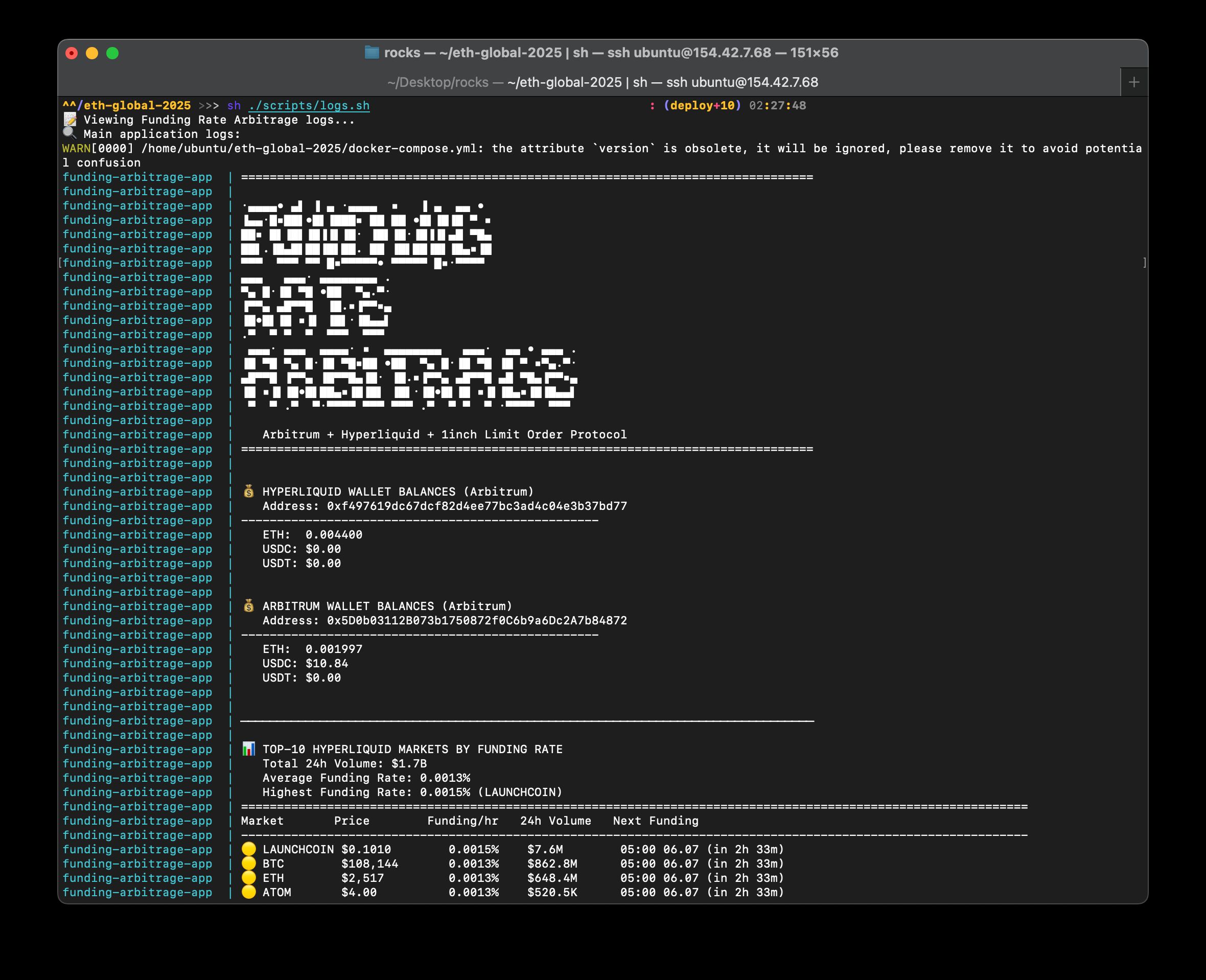
Transfer the desired amount of the base asset (e.g., ETH, USDC) to your Layer-2 wallet. Ensure you have enough of the native L2 token (like ETH on Arbitrum or OP on Optimism) to cover transaction fees for both the spot purchase and the perp opening. Most L2s require a small amount of the L1 token bridged over to pay for gas.
Navigate to the spot trading interface on your chosen L2 DEX or CEX. Purchase the base asset you intend to use for the arbitrage. For example, if you are trading ETH perps, buy the equivalent amount of ETH on the spot market. This establishes your long exposure to the asset's price.
Switch to the perpetual futures market for the same asset. Open a short position with a value equal to your spot holdings. For instance, if you bought 1 ETH spot, open a 1 ETH short on the perp market. Use 1x leverage to maintain a true delta-neutral stance. Avoid high leverage, as it increases liquidation risk and complicates the math of your funding rate yield.
Confirm that your total delta is near zero. Your long spot position should have a delta of +1, and your short perp position should have a delta of -1. If the numbers match, your portfolio is hedged against price swings. You can now monitor the funding rate history to ensure the strategy remains profitable over time.
This setup locks in your market exposure, allowing you to focus on the funding rate differential. As long as the funding rate remains positive, your short position will accumulate payments. However, remember that funding rates can flip negative, meaning you might have to pay longs instead. Regular monitoring is essential to adjust your positions if the market conditions change.
Calculate the real annualized return
Execute a Funding Arb Trade on Layer-2 Networks works best as a clear sequence: define the constraint, compare the realistic options, test the tradeoff, and choose the path with the fewest hidden costs. That order keeps the advice usable instead of decorative. After each step, pause long enough to check whether the recommendation still fits the reader's actual situation. If it depends on perfect timing, unusual access, or a best-case budget, include a simpler fallback.
| Factor | What to check | Why it matters |
|---|---|---|
| Fit | Match the option to the primary use case. | A good deal still fails if it does not fit the job. |
| Condition | Verify age, wear, and service history. | Hidden condition issues erase upfront savings. |
| Cost | Compare purchase price with likely upkeep. | The cheapest option is not always the lowest-cost option. |
Monitor for liquidation and basis risk
Funding arbitrage isn't a set-and-forget strategy. On Layer-2 networks, the gap between the exchange price and the underlying asset can widen rapidly due to infrastructure quirks. If you don't monitor your positions, a sudden spike in volatility or a bridge delay can trigger a liquidation before you even see the price move.
The primary danger isn't just the price direction; it's the basis risk. When the basis widens against your position, your unrealized losses grow. On L2s, this can happen faster than on Ethereum mainnet because liquidity is fragmented. A sudden influx of traders trying to arbitrage the spread can drain liquidity from one side, causing the price to disconnect from the spot market.
Bridge withdrawal times are another hidden variable. If you need to move funds quickly to cover a margin call, Layer-2 withdrawal windows (often 7 days for optimistic rollups like Arbitrum or Optimism) can leave you exposed. You might have enough collateral on the exchange, but if it's locked in a bridge, you can't access it in time.
To manage this, keep your margin buffer wider than you would on mainnet. Aim for at least 20-30% excess collateral to absorb basis swings. Set up price alerts not just for the asset, but for the funding rate itself. If the rate spikes, the basis is likely widening, and you should be ready to adjust your position or add margin immediately.
How to close the position and collect yield
Closing a funding arb trade is a two-part exit: you must unwind the perpetual futures short and sell the spot collateral. The timing of this exit determines whether you secure the final funding payment or miss it due to a mismatch in settlement windows.
Step 1: Close the perpetual short
To lock in your gains, place a market order to buy back the exact amount of the asset you are shorting on the Layer-2 network. This action closes your leverage position and realizes any price appreciation or funding payments accumulated. Ensure you account for the withdrawal fee or gas cost associated with the L2 bridge to avoid eating into your profit margin.
Step 2: Sell the spot collateral
Once the short is closed, you still hold the underlying asset in your spot wallet. Sell this spot position on the same exchange or DEX where you originated the trade. This converts your crypto exposure back into a stablecoin like USDC or USDT, finalizing the delta-neutral status of your trade and preparing the funds for withdrawal.
Step 3: Withdraw to secure profits
Transfer your stablecoin proceeds from the L2 exchange wallet to your primary cold storage or main exchange account. This step removes the assets from the volatile Layer-2 environment, ensuring you can no longer be affected by network congestion or sudden price spikes. Verify the withdrawal address matches your destination wallet exactly to prevent loss of funds.
Place a market buy order for the exact size of your short position. This action closes your leverage exposure and locks in the funding rate profits accumulated during the holding period.
Sell the underlying asset held in your spot wallet. Converting to a stablecoin like USDC neutralizes your market risk and prepares the capital for withdrawal.
Transfer your stablecoin proceeds to a secure wallet or main exchange account. This removes the funds from the Layer-2 network, protecting your gains from network volatility.
Common funding arb mistakes
Even with a solid setup, execution errors can erase your edge. The most frequent pitfalls involve ignoring how funding rate direction changes and underestimating Layer-2 network congestion costs.
Funding rates are not static. A rate that looks profitable today can flip negative as market sentiment shifts or arbitrageurs crowd the trade. If you do not monitor the direction and magnitude of these changes, your short side can become a liability rather than a hedge. Treat the funding rate as a dynamic variable, not a fixed income stream.
Layer-2 networks offer lower fees, but they are not immune to congestion. During high-volume periods, L2 transaction costs can spike, and withdrawal delays may occur. If you underestimate these costs or the time it takes to rebalance positions, your net returns will suffer. Always model your costs using worst-case network conditions, not average ones.
Funding rate arbitrage: what to check next
Funding rate arbitrage on Layer-2 networks offers a way to capture yield while remaining delta-neutral, but it introduces unique complexities around fees and tax treatment. Understanding these mechanics is essential for maintaining the strategy's profitability.
Is funding arbitrage taxable income?
Yes. The periodic funding payments you receive are generally treated as ordinary income or capital gains depending on your jurisdiction and how the exchange reports the transaction. Because Layer-2 transactions are on-chain, you are responsible for tracking each payment event for tax reporting. Consult a tax professional familiar with crypto derivatives to ensure compliance with local regulations.
How does capital efficiency compare to spot trading?
Funding arbitrage is capital-efficient because you hedge your exposure. You hold the underlying asset (or its equivalent) on one side and a short position on the other, locking in the funding spread rather than betting on price direction. This allows you to deploy capital that would otherwise sit idle in a spot wallet, generating yield without taking on directional market risk.
Which platforms are best for L2 funding arb?
Choose platforms with the lowest gas fees and highest liquidity for the specific Layer-2 network you are targeting. Ethereum L2s like Arbitrum or Optimism often have better funding rate spreads due to higher institutional participation. Verify that the exchange supports the specific token pairs you want to trade and check their historical funding rate data to ensure consistent opportunities exist.
No comments yet. Be the first to share your thoughts!