Funding arb limits to account for
Funding rate arbitrage is not a free lunch; it is a trade between yield and execution risk. The strategy captures the periodic funding payment exchanged between long and short traders, but only if you can manage the structural frictions that erode those gains. In 2026, the spread is rarely pure alpha—it is a net of fees, latency, and capital efficiency.
The primary constraint is the cross-exchange basis spread. While Binance or Bybit may offer high funding rates, the corresponding perpetual swap price often deviates from the spot market. If the basis is negative or narrow, the cost of hedging your long spot position with a short perpetual position can wipe out the funding income before it even settles. You are not just betting on the rate; you are betting on the stability of the spread between exchanges.
Execution latency is the second major hurdle. Funding payments occur every 8 hours on most major platforms. If your automated infrastructure is slow to rebalance positions or if exchange APIs throttle your requests, you miss the window. A delay of even a few minutes during high volatility can turn a profitable arb into a loss, as the price moves against your unhedged exposure.
Finally, consider counterparty risk and withdrawal limits. If one exchange restricts withdrawals or halts trading during a market crash, your hedge is stranded. The strategy requires robust infrastructure that can monitor multiple venues simultaneously and execute trades with minimal slippage. Without this, the theoretical yield of funding arb remains just that—theoretical.
Funding arb choices that change the plan
Funding Arb works best as a clear sequence: define the constraint, compare the realistic options, test the tradeoff, and choose the path with the fewest hidden costs. That order keeps the advice usable instead of decorative.
| Factor | What to check | Why it matters |
|---|---|---|
| Fit | Match the option to the primary use case. | A good deal still fails if it does not fit the job. |
| Condition | Verify age, wear, and service history. | Hidden condition issues erase upfront savings. |
| Cost | Compare purchase price with likely upkeep. | The cheapest option is not always the lowest-cost option. |
Choosing the right funding arb path
Funding rate arbitrage is not a single trade; it is a spectrum of infrastructure complexity. Your choice depends on how much capital you have, how often you want to trade, and whether you can tolerate exchange risk. Below are the four most common execution models, ranked from simplest to most sophisticated.
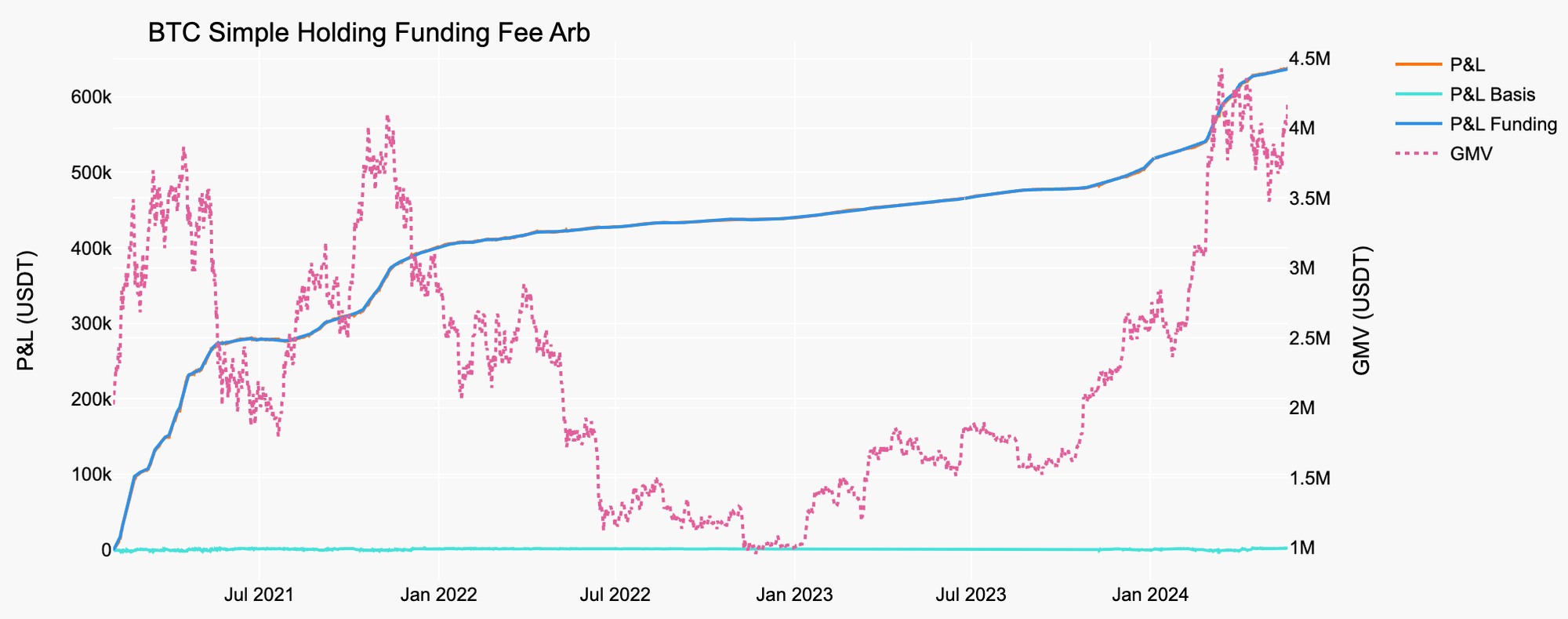
The baseline strategy. You buy the spot asset (e.g., BTC) and sell the perpetual futures contract simultaneously. This locks in the funding rate as income while maintaining delta neutrality. It requires minimal infrastructure and works well for large, infrequent trades where you can absorb funding payment intervals.
This approach exploits price and funding differences between two exchanges. You buy on Exchange A and sell on Exchange B. It captures higher yields but introduces withdrawal risk and latency. You must ensure the spread between exchanges exceeds the transfer fees and withdrawal times.
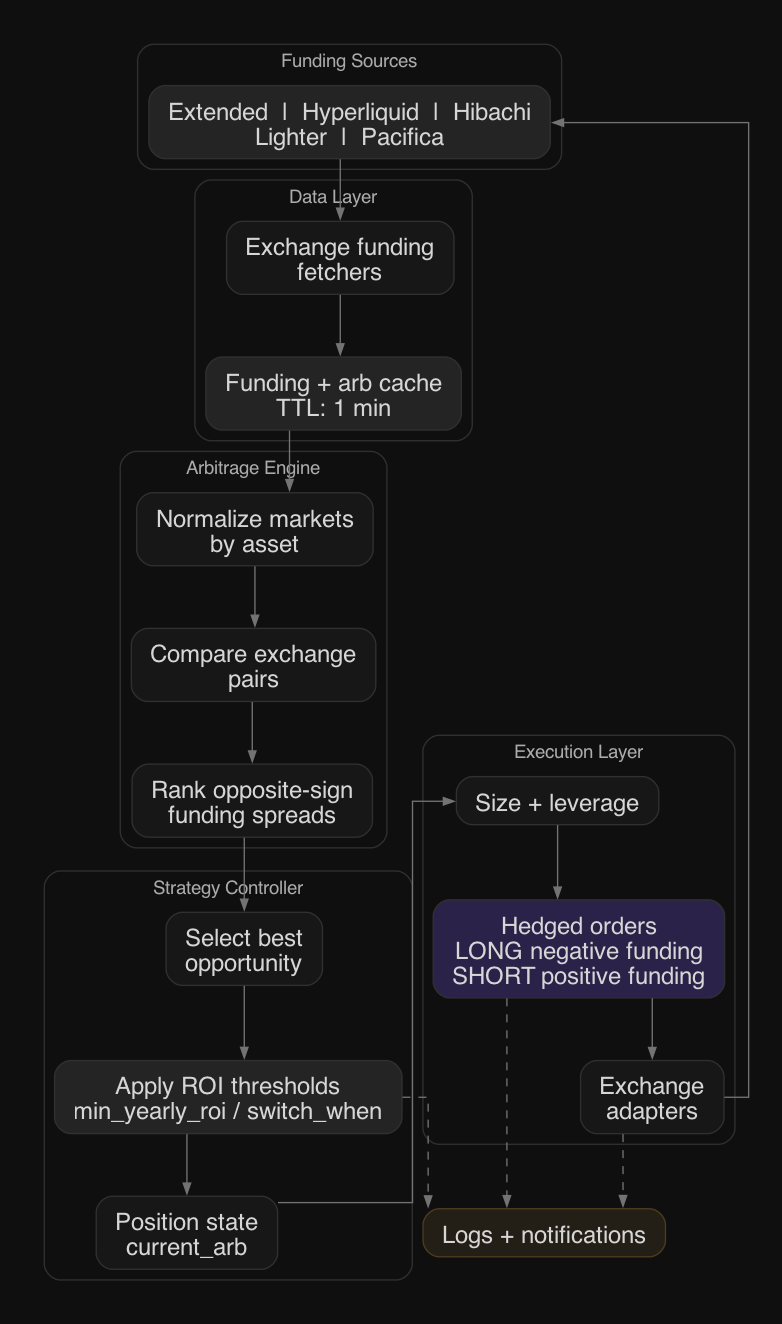
For frequent traders, automation is essential. Scripts monitor funding rates across multiple venues and execute trades when thresholds are met. This reduces human error and allows you to capture short-lived opportunities. However, it requires robust API management and fail-safes to prevent runaway orders.
The most complex model. You provide liquidity on both sides of the order book while holding a hedged position to collect funding payments. This maximizes yield but requires significant capital, low-latency infrastructure, and sophisticated risk management to handle adverse price movements.
Decision framework
When selecting a path, prioritize capital efficiency over yield percentage. A lower yield with lower risk is often more sustainable than a high-yield strategy that exposes you to exchange insolvency or liquidation cascades. Start with the cash and carry model to understand the mechanics before adding complexity.
| Strategy | Complexity | Primary Risk | Capital Needed |
|---|---|---|---|
| Cash and Carry | Low | Exchange Solvency | High |
| Cross-Exchange | Medium | Transfer Latency | Medium |
| Automated Basis | High | API Failure | Medium |
| Market Making | Very High | Market Moves | Very High |
Next steps
Before deploying capital, backtest your chosen strategy using historical funding data. Verify that your assumed yields hold up during high-volatility periods. Ensure you have a clear exit strategy for each leg of the trade. Consider using a demo account to test your infrastructure before going live.
Spotting Weak Options in Funding Arb
Not every basis trade offers a reliable edge. Many retail guides promote strategies that look profitable on paper but fail under live execution. You need to filter out these weak options before deploying capital.
Ignoring Exchange Solvency Risks
Basis spreads widen when one exchange faces liquidity stress or solvency doubts. A high funding rate often signals distress, not opportunity. If the exchange in the short leg has a poor track record or unclear reserves, the spread premium isn't worth the counterparty risk. Stick to exchanges with transparent proof-of-reserves.
Overlooking Funding Frequency
Some platforms pay funding every 8 hours; others do it daily or weekly. A strategy that works on an 8-hour cycle may be unprofitable on a weekly one due to compounding differences and opportunity costs. Always check the specific funding interval for the pair you are trading. Mismatched frequencies can turn a positive expected value trade into a negative one.
Chasing Low-Volume Pairs
Thinly traded pairs have wider spreads, but also higher slippage and execution risk. Entering or exiting positions in low-volume markets can erase your basis capture. Focus on high-liquidity assets like BTC or ETH where you can enter and exit quickly without moving the market. The spread might be smaller, but the reliability is significantly higher.
Funding arb: what to check next
Cross-exchange basis spreads rely on the timing of funding payments, but execution carries specific mechanical risks. Before deploying capital, address these practical objections regarding fees, liquidity, and counterparty safety.
Do funding fees justify the trading costs?
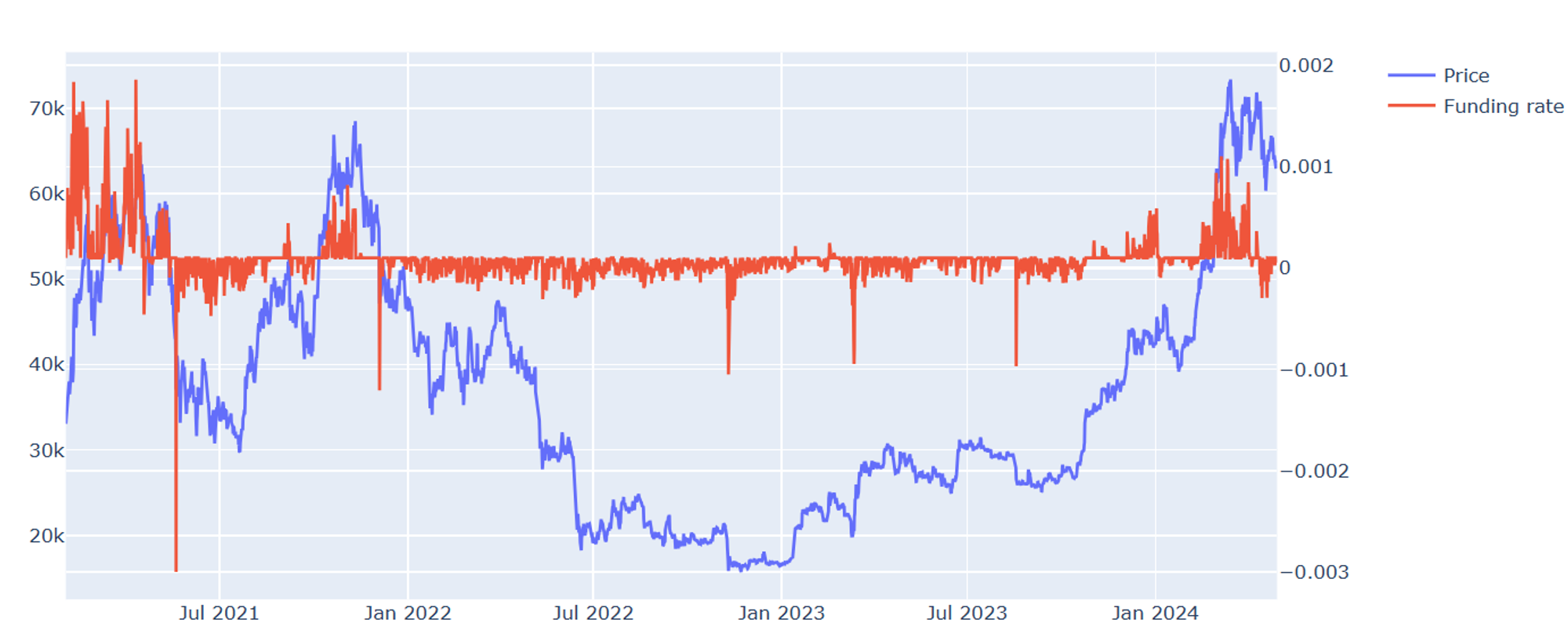
Not automatically. Funding payments occur every 8 or 24 hours, but you incur deposit, withdrawal, and trading fees on both the long and short legs. A 0.1% funding rate sounds attractive, but after subtracting 0.06% taker fees and network gas, the net annualized yield drops significantly. Calculate the break-even rate for your specific exchange tier before entering the spread.
What happens if one exchange halts withdrawals?
This is the primary counterparty risk in cross-exchange arbitrage. If the exchange holding your short position freezes withdrawals to cover a liquidity crunch, you cannot close the hedge. Your long position remains exposed to market risk. Diversify across multiple reputable venues and avoid locking all capital on a single platform with lower regulatory oversight.
How does liquidation risk affect delta neutrality?
Theoretically, funding arb is delta-neutral, but price divergence between exchanges can trigger liquidation on one side. If the spot price on your long-exchange crashes while the perp price on your short-exchange lags, your margin ratio may breach maintenance limits. Use isolated margin with strict stop-losses and monitor liquidation prices on both legs simultaneously.
Can I automate this without coding?
Yes, but manual execution rarely captures the best spreads. Most profitable funding arb relies on bots that monitor rate differentials across venues and execute trades in milliseconds. If you lack coding skills, consider using existing arbitrage scanners or bot services, but verify their security audits and fee structures carefully to avoid hidden costs.
No comments yet. Be the first to share your thoughts!