Funding arbitrage limits to account for
Funding rate arbitrage relies on a simple premise: you hold a spot position in a cryptocurrency while simultaneously opening an offsetting short position on a perpetual futures contract. This delta-neutral setup aims to capture the periodic funding payments exchanged between long and short traders without exposing the portfolio to directional price movement. When the funding rate is positive, longs pay shorts; when negative, the flow reverses. The goal is to harvest these payments as a steady yield stream, theoretically insulated from market volatility.
However, the strategy is not without significant friction. The primary constraint is that the funding yield must exceed the combined costs of trading fees, liquidation risk premiums, and capital inefficiency. In 2026, as institutional liquidity deepens across major exchanges, these spreads have compressed considerably. What once offered double-digit annualized yields now often yields single-digit returns after costs. This compression forces traders to seek out less liquid altcoins or cross-exchange opportunities, both of which introduce new layers of risk.
Liquidation risk remains the most acute threat. If the price of the underlying asset moves sharply, the value of your spot and futures positions will diverge. While the delta remains neutral, the margin requirements on the futures side may spike, potentially triggering a liquidation if the exchange does not offer true cross-margin isolation or if the spread widens too quickly. Exchange-specific risks such as withdrawal limits, API downtime, or changes in funding rate calculation methods can disrupt the strategy overnight. Traders must continuously monitor these operational variables alongside the market data.
Funding arb choices that change the plan
Funding rate arbitrage is often marketed as a risk-free yield source, but the reality involves several concrete variables that can erode returns or introduce hidden risks. Before deploying capital, you need to evaluate the spread between exchanges, the cost of holding the spot position, and the mechanical reliability of your execution. This section breaks down the primary factors to consider when structuring a delta-neutral funding trade.
Exchange Spread and Basis Risk
The core profit driver is the difference in funding rates between a perpetual futures contract and the spot market. However, this spread is not static. It widens during periods of high bullish sentiment and narrows or flips during bearish phases. You must compare the current funding rate on your chosen exchange against spot prices to ensure the basis justifies the capital lock-up.
| Factor | Impact on Yield | Risk Level |
|---|---|---|
| Funding Rate Spread | Directly determines gross yield | Low |
| Exchange Solvency | Potential loss of principal | High |
| Liquidation Price | Forced exit if leverage is mismanaged | Medium |
| Withdrawal Fees | Reduces net annualized return | Low |
Execution and Mechanical Risk
Even with a positive spread, the trade fails if the mechanism to capture the funding payment breaks. This includes exchange downtime, API latency, or smart contract failures if you are using DeFi protocols. Manual execution introduces the risk of missing the funding time slot, while automated bots require robust monitoring to prevent over-leveraging during volatility spikes.
Capital Efficiency and Opportunity Cost
Funding arbitrage ties up capital on the spot side of the trade. While the position is delta-neutral, the capital is not idle. You must calculate the annualized yield against other opportunities, such as staking or lending. If the funding rate drops below the cost of borrowing or the opportunity cost of your capital, the trade becomes unprofitable regardless of the short-term spread.
Turn Research Into a Funding Arb Decision Framework
Funding rate arbitrage is no longer a niche exploit; it is a structured infrastructure play. The gap between long and short funding payments on perpetual futures represents a real yield opportunity, but capturing it requires precise execution. You are essentially selling insurance to leveraged traders who are willing to pay a premium to maintain their positions.
To make this work in 2026, you must move beyond simple manual trading. The market has evolved. High-frequency firms dominate the spread, leaving little room for retail traders who rely on manual entry. Your framework must prioritize tools that automate the delta-neutral hedge and monitor funding rates in real-time.
The core of your decision framework rests on three pillars: infrastructure reliability, execution speed, and cost efficiency. If any of these fail, the yield disappears. Below is the practical workflow to structure your approach, ensuring you capture the spread without exposing yourself to unexpected liquidation risk.
Start by choosing a platform that offers integrated perpetual futures and spot trading. You need a single interface where you can open a long position on the spot market and a short position on the perpetual contract simultaneously. This immediate hedging is what makes the strategy delta-neutral, protecting you from price volatility. Look for platforms with high liquidity to ensure your positions fill at the intended price.
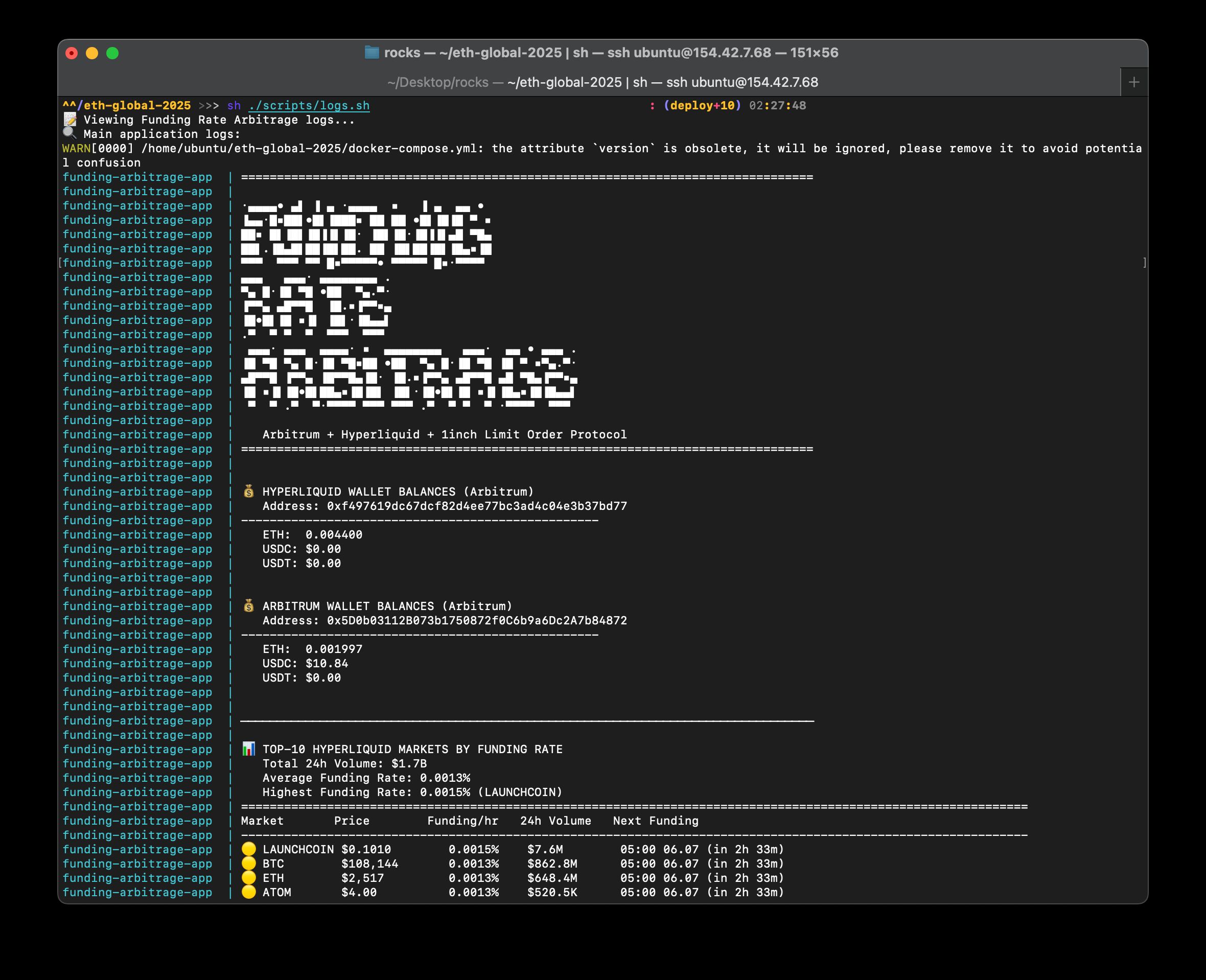
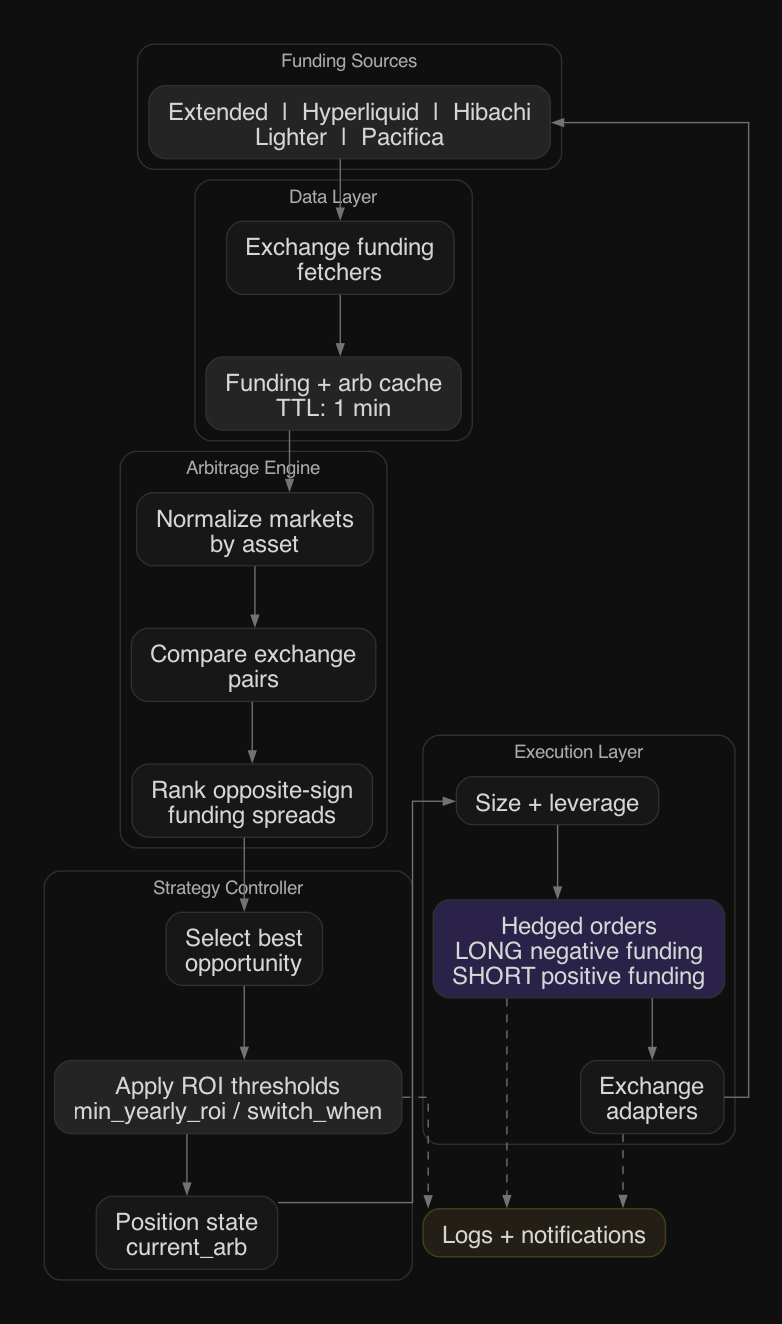
Manual tracking is too slow. Use a bot or a dedicated dashboard that alerts you when funding rates spike. Positive funding rates mean longs pay shorts, which is your profit source. Negative rates mean you pay to hold the short position, which erodes margins. Your system should automatically adjust your position sizes or trigger trades when the projected annualized yield exceeds your cost threshold.
Trading fees are the silent killer of arbitrage profits. Every time you rebalance or close a position, you pay a fee on both the spot and perpetual legs. Ensure your calculated yield is significantly higher than the combined maker and taker fees. If you are trading manually, use limit orders to qualify for maker fees whenever possible. If using bots, check if the platform offers fee discounts for high-volume traders or token holders.
Your funds are exposed to the exchange and the underlying smart contracts. Diversify across multiple reputable exchanges to avoid single-point failure. In 2026, regulatory scrutiny is high, so choose platforms with transparent reserves and strong compliance records. Regularly audit your smart contract interactions if you are using DeFi-based arbitrage tools, as vulnerabilities can lead to total loss.
Avoid the weak options
Many platforms advertise "auto-arbitrage" bots that promise passive income with zero effort. These tools often fail to account for withdrawal fees, slippage during volatility, or the latency required to execute delta-neutral trades. Relying on a black-box algorithm without understanding the underlying mechanics turns your capital into a liquidity test for the platform itself.
True funding rate arbitrage requires manual oversight or highly customizable, self-hosted infrastructure. You must monitor the spread between spot and perpetual prices in real-time. If a tool claims to handle everything without your input, it is likely taking a significant cut of the yield or exposing you to counterparty risk on a less regulated exchange.
The best approach involves selecting a reliable exchange with deep liquidity and using a reputable execution tool only for monitoring. Keep the actual trading on a platform you trust with your assets. This ensures you retain control over your positions and can react instantly to market changes that automated bots might miss.
Funding rate arbitrage: what to check next
Funding rate arbitrage is a delta-neutral strategy that captures the periodic funding payment exchanged between long and short traders on perpetual futures contracts. To execute this, you typically open a long position on one exchange and a short position on another where the funding rate is more favorable, or use a single platform that allows you to go long spot while shorting the perpetual. The goal is to earn the funding payment while the hedge offsets the directional price risk of the underlying asset.
Does crypto arbitrage still work in 2026? The mechanics remain valid, but the landscape has shifted. While funding rates still exist, the spread is often narrower due to increased market efficiency and algorithmic trading. Success now depends on speed, low-latency execution, and finding less efficient markets or specific altcoins where imbalances persist longer than they do for Bitcoin or Ethereum.
Is funding rate arbitrage profitable? It can be, but it is not risk-free. Profitability depends on the net funding rate minus trading fees, withdrawal costs, and spread. If the funding rate is 0.01% per 8 hours, you might earn roughly 10-12% annually before costs. However, exchange risks, such as insolvency or withdrawal halts, can erase gains instantly. Additionally, if the price moves sharply against your hedge, you may face liquidation on one side if margin management is poor.
Which is the best AI for arbitrage? Dedicated "AI arbitrage bots" are often marketing hype. Instead of a black-box AI, look for platforms with robust API access and automated funding rate tracking tools. These tools help you identify opportunities and execute trades quickly. The best "intelligence" comes from your own due diligence on exchange reliability, fee structures, and liquidity depth rather than a proprietary algorithm promising guaranteed returns.
No comments yet. Be the first to share your thoughts!