How funding arb works in 2026
Funding rate arbitrage is a market-neutral strategy that profits from the spread between perpetual futures and spot prices. Unlike directional trading, where you bet on whether an asset will go up or down, funding arb relies on the periodic payments exchanged between long and short traders. In a bull market, longs typically pay shorts; in a bear market, the flow reverses. The goal is to capture that payment while eliminating price risk.
The core mechanism is simple: you buy the underlying asset on the spot market and simultaneously open a short position on the perpetual futures contract. This is known as a delta-neutral hedge. Because your long and short positions offset each other, changes in the asset’s price do not impact your overall portfolio value. You are not trying to predict the market; you are simply collecting the funding rate.
To see this in action, consider Bitcoin. If the funding rate is 0.01% every eight hours, a trader holding a delta-neutral position collects that rate from the longs. Over a year, this compounds into a significant annual percentage yield (APY), provided the rate remains positive. The strategy works best when the spread is wide, which often happens during periods of high volatility or strong bullish sentiment.
The infrastructure supporting this trade has evolved significantly. In 2026, the ability to execute these trades quickly and with low slippage is critical. Traders rely on advanced data feeds and automated execution engines to manage the positions. Without these tools, the transaction costs and timing delays can easily erase the thin margins that make funding arb profitable.
This baseline understanding sets the stage for analyzing the infrastructure shifts that are reshaping the landscape. As exchanges compete for liquidity, they adjust their funding mechanisms, creating new opportunities and risks for arbitrageurs. The next sections will explore how these changes impact strategy and execution.
How exchange infrastructure shapes funding arb
Funding rate arbitrage is no longer just about chasing high rates; it is about navigating the plumbing beneath them. In 2026, the gap between centralized exchanges (CEX) and decentralized exchanges (DEX) has widened, creating distinct risk profiles for each venue. Understanding these structural differences is essential for preserving capital.
CEXs offer deep liquidity and fast execution but introduce counterparty risk. Your funds sit on their servers, meaning a hack or withdrawal freeze can erase profits instantly. DEXs, by contrast, keep custody in your wallet, removing counterparty risk but exposing you to smart contract vulnerabilities and higher gas costs. The choice isn't just about yield; it's about where you are willing to hold your collateral.
Settlement speed is another critical factor. CEXs often settle funding payments instantly or within hours, allowing for rapid compounding. DEX settlements can lag due to block times and oracle delays. If the oracle price feed drifts from the market price, your position might be liquidated prematurely or miss the funding window entirely. This latency creates a "slippage gap" that can turn a profitable trade into a loss if not monitored closely.
Oracle reliability has become the new frontier of risk. As more protocols move on-chain, the dependency on accurate, real-time price data grows. A single oracle failure can cascade, causing mispricing and unexpected liquidations. Traders must now audit not just the exchange, but the data feeds powering it.
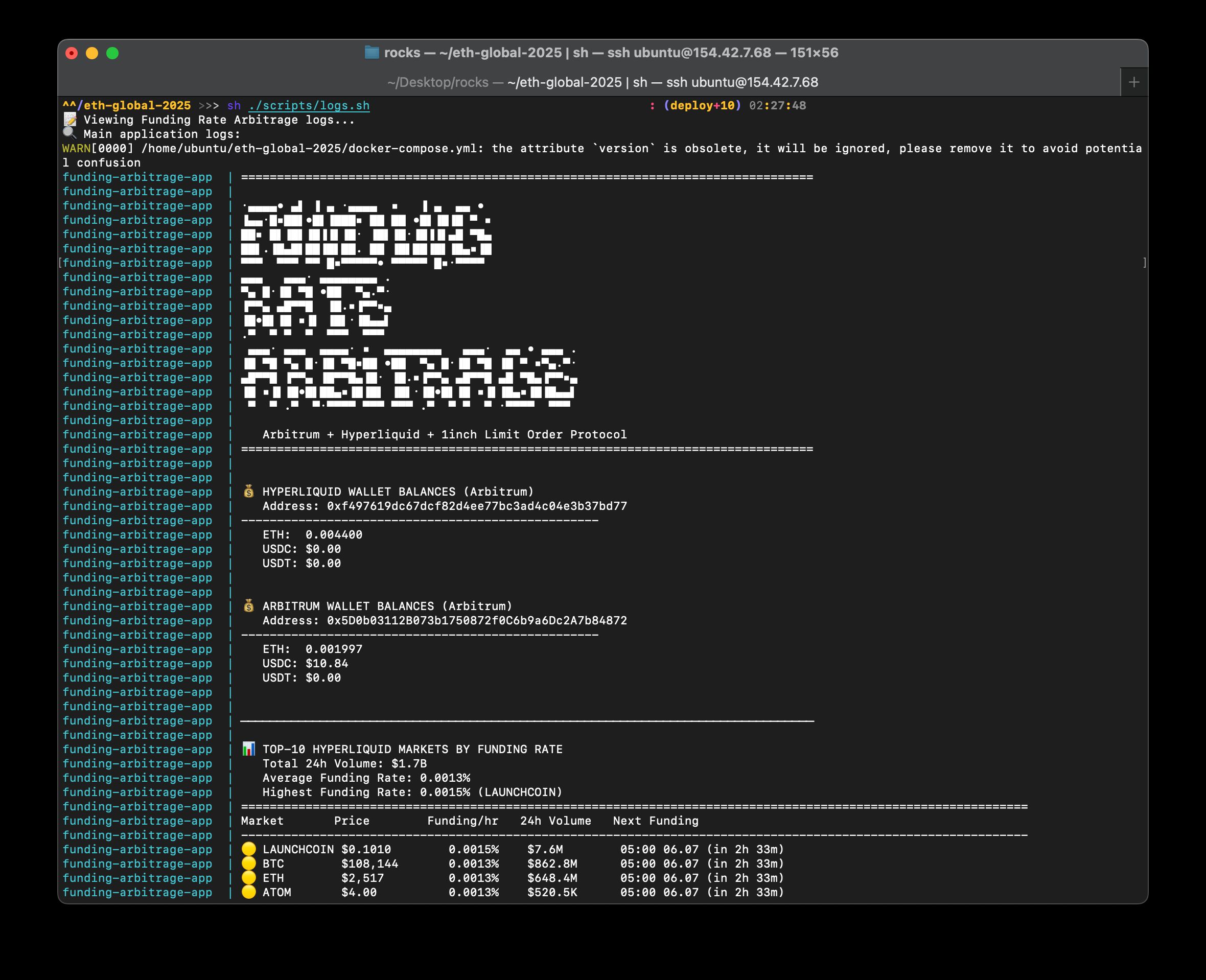
The infrastructure shift is forcing traders to be more disciplined. It is no longer enough to find a high funding rate; you must understand the settlement mechanism, the custody model, and the oracle stability of the venue. Those who treat infrastructure as a core component of their strategy will outperform those who only chase yields.
| Feature | CEX | DEX |
|---|---|---|
| Custody | Exchange-held | Self-custodied |
| Settlement Speed | Fast (hours) | Variable (block-dependent) |
| Counterparty Risk | High | Low |
| Smart Contract Risk | Low | High |
| Capital Efficiency | High | Moderate |
Timing entries with live data
Static snapshots of funding rates are traps. A rate that looks generous on a weekly average might have spiked 200 basis points in the last hour, offering a fleeting window that closes before your margin order fills. Funding arb relies on precision, not estimation. You need to see the tape as it moves.
Use provider-backed widgets to monitor real-time conditions. The price widget below gives you the current spot context, while the chart tracks the funding rate spread over the last 30 days. This live view helps you distinguish between a structural trend and a temporary squeeze.
When the spread widens significantly against the historical mean, it often signals a short-term imbalance. Enter when the live rate confirms the anomaly, not when a delayed report suggests it. Waiting for a "perfect" entry usually means missing the window. Trust the live feed over the archive.
Execution checklist for funding arb trades
Running a delta-neutral funding arb trade requires precision. One missed step can turn a steady yield into a margin call. This checklist breaks down the execution into three phases: pre-trade verification, capital allocation, and post-trade monitoring.
Before entering, confirm the funding rate is sustainable and not an outlier spike. Check the order book depth on both the spot and perpetual sides. Thin liquidity increases slippage risk during rebalancing. Ensure the net basis (funding yield minus trading fees) remains positive even with a 1% adverse price move.
Do not deploy 100% of your available margin. Keep a 15-20% buffer for maintenance margin requirements. This cushion protects against sudden volatility that could trigger liquidation on your short side. Calculate the maximum drawdown scenario based on the asset's 30-day volatility.
Simultaneously buy the spot asset and short the equivalent value on the perpetual contract. Use limit orders to control entry prices. If the spread is wide, consider using a market maker bot or splitting the order to reduce market impact. Verify the hedge ratio is exactly 1:1 after execution.
Track the funding rate payments and the mark price of the perpetual. Rebalance the hedge if the price moves significantly away from your entry point to maintain delta neutrality. Set alerts for margin ratio thresholds. Most platforms automate funding payments every 8 hours, but manual checks prevent surprises.
The key is consistency. Funding arb is a game of small, repeated gains. Avoid over-leveraging, and always prioritize capital preservation over yield maximization.
Frequently asked questions about funding arb
Is funding arbitrage actually risk-free?
No strategy is without risk, and delta-neutral does not mean risk-free. While funding arb removes directional exposure to price movements, you still face exchange counterparty risk, liquidation cascades if collateral drops below maintenance requirements, and smart contract vulnerabilities. In 2026, as infrastructure shifts, platform reliability is more critical than ever. Always diversify across exchanges and monitor margin ratios closely.
How are funding rates calculated and paid?
Funding rates are periodic payments exchanged between long and short positions to keep perpetual futures prices anchored to the spot price. When the funding rate is positive, longs pay shorts; when negative, shorts pay longs. The rate is typically calculated based on the premium of the futures price over the spot price, adjusted by time intervals (often every 8 hours). Understanding this mechanism is essential for estimating potential yield.
What are the tax implications of funding payments?
Tax treatment of funding payments varies significantly by jurisdiction. In many regions, funding payments are not treated as interest income but rather as part of the capital gains or losses from the underlying position, or as separate ordinary income. Because these rules change frequently, consult a tax professional familiar with crypto derivatives. Misclassification can lead to unexpected liabilities.
How much capital is needed to start?
You need enough capital to cover exchange fees and maintain a safety margin against liquidation. While some platforms allow small positions, the fixed costs of entry and exit can eat into profits on small accounts. Most successful arb traders start with enough capital to absorb minor price fluctuations without triggering margin calls, typically requiring a few thousand dollars depending on the exchange and leverage used.
No comments yet. Be the first to share your thoughts!