
How funding rate arbitrage works
Funding rate arbitrage is a delta-neutral strategy designed to capture yield from the premium that perpetual futures traders are willing to pay. The core mechanic is simple: you buy the underlying asset on the spot market and simultaneously short the same asset on the perpetual futures market. This pairing hedges your exposure to price movements, meaning you profit regardless of whether the market moves up or down.
The profit comes from the funding rate itself. In a bullish market, longs pay shorts. By holding the short position, you collect these payments, typically every eight hours, as long as the rate remains positive. It functions like a bond coupon, but derived from crypto market sentiment rather than traditional debt interest.
To visualize this, consider the spread between exchanges. If Binance shows a higher positive funding rate for BTC than Bybit, the opportunity lies in capturing that differential. The chart below illustrates how these rates fluctuate, highlighting the moments when the spread widens enough to justify the trade.
Success in this strategy relies on minimizing friction. Trading fees, slippage, and the cost of borrowing can quickly erase the funding yield if not calculated precisely. The goal is to isolate the funding payment as pure alpha, free from directional risk or excessive overhead.
Key infrastructure shifts in 2026
The funding arb landscape is undergoing a structural reset. What used to be a simple game of chasing the highest 8-hour payout on a centralized exchange (CEX) is now a fragmented ecosystem. New perpetual DEXs, stricter regulatory frameworks, and liquidity fragmentation are forcing traders to adapt their infrastructure stack or watch their spreads evaporate.
The rise of perp DEXs and oracle pricing
Perpetual DEXs are no longer niche experiments; they are primary liquidity venues for many high-beta assets. Unlike CEXs that often rely on mark prices to prevent liquidation cascades, many perp DEXs use oracle-based pricing or more frequent settlement intervals. This changes the arb dynamic significantly. Spreads can be wider and more volatile, but the lack of centralized counterparty risk offers a different kind of security.
| Feature | Traditional CEX | New Perp DEXs |
|---|---|---|
| Settlement Frequency | 8-hourly (standard) | Hourly or real-time |
| Price Source | Mark Price (Index + Premium) | Oracle Price (Chainlink, etc.) |
| Counterparty Risk | Centralized Exchange | Smart Contract / Pool |
| Regulatory Oversight | Varies by jurisdiction | Decentralized / Unregulated |
This shift means your arb tools need to handle more frequent data feeds. Waiting for the traditional 8-hour window can leave you exposed to oracle drift or sudden liquidity crunches on-chain.
Regulatory pressure and liquidity fragmentation
Regulators are increasingly targeting the infrastructure that facilitates these trades. In 2026, we are seeing a clear split in liquidity. Major CEXs are complying with stricter KYC/AML rules, which limits the anonymity and speed that some arb strategies relied on. Meanwhile, liquidity is fragmenting across multiple smaller venues and L2 chains.
This fragmentation is a double-edged sword. On one hand, it creates more opportunities for cross-venue arbitrage. On the other, it increases execution risk. Slippage on smaller venues can eat into your funding rate spread before you can close the position. You need to account for withdrawal times and network congestion in your calculations, not just the spread itself.
Adapting your tooling
To survive this shift, your infrastructure must be modular. Relying on a single CEX data feed is no longer enough. You need tools that can aggregate funding rates from both CEXs and major perp DEXs in real-time. Look for platforms that offer API access to multiple venues simultaneously, allowing you to execute trades across different ecosystems without manual intervention.
The gap between the "easy money" era and the current reality is widening. Success in 2026 will depend on your ability to navigate this fragmented, regulated, and fast-moving infrastructure. Focus on reliability and speed over simple spread chasing.
Essential tools for market research
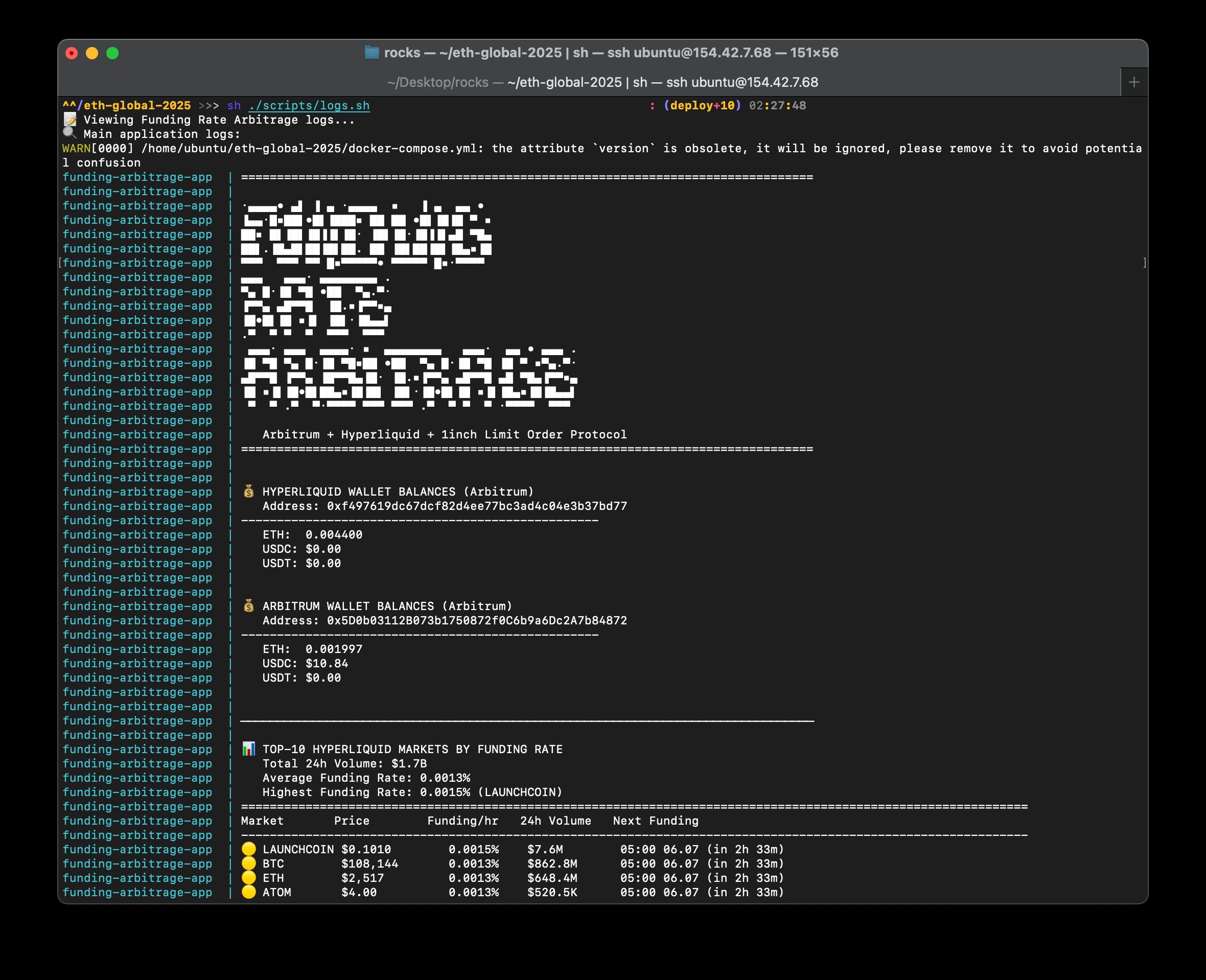
Tracking funding rates requires more than a single exchange dashboard. You need a stack that separates real-time data from historical context, allowing you to spot anomalies before they disappear. The best tools act like a radar system, highlighting divergences between spot and perpetual prices across multiple venues.
Tracking live rates and spreads
CoinGlass and Coinglass provide the most accessible real-time feeds for funding rates and open interest. Their interfaces allow you to filter pairs by rate percentage, helping you identify tokens with sustained positive or negative funding. Look for consistency over a 24-hour window rather than momentary spikes, which often indicate temporary liquidity imbalances rather than sustainable arb opportunities.
Calculating true APY
Raw funding rates do not equal profit. You need a calculator that factors in trading fees, withdrawal costs, and slippage. Tools like ArbitrageScanner offer detailed breakdowns that simulate net annualized returns after deducting exchange maker/taker fees. This distinction is critical; a 10% gross rate can easily turn negative if you are trading low-liquidity pairs with wide spreads.
Monitoring risk and liquidity
Funding rate arbitrage is not risk-free. Sudden liquidations in the perpetual market can trigger cascading price movements that hurt your spot position. Use risk monitoring tools to track liquidation heatmaps and order book depth. If the order book is thin, even a small price move against your hedge can erode your capital faster than the funding fees can compensate.
Common risks and how to manage them
Funding arbitrage is often marketed as a "risk-free" yield source, but that label is misleading. While the strategy is delta-neutral—meaning your spot and futures positions offset each other's price exposure—you are still exposed to significant structural and operational risks. The "free money" disappears quickly when you account for liquidation cascades, exchange insolvency, and smart contract vulnerabilities.
Liquidation and Basis Risk
The core of this strategy relies on the funding rate. If the basis (the difference between spot and futures prices) moves against you faster than the funding payments accumulate, you can face a margin call. This is especially dangerous during high-volatility events where price gaps can bypass stop-losses. You are not just betting on the rate; you are betting on the stability of the spread.
Exchange and Counterparty Risk
When you split capital between a spot exchange and a futures exchange, you are relying on two separate entities to remain solvent. If one exchange halts withdrawals or faces insolvency, your hedge is broken. You are left with an unhedged position on the remaining exchange, potentially wiping out your capital. This is why diversifying across reputable, audited platforms is non-negotiable.
Smart Contract Risk
If your arbitrage involves DeFi protocols or cross-chain bridges, you introduce smart contract risk. A bug in a lending protocol or a bridge contract can lead to total loss of funds, regardless of how well your arbitrage logic is structured. Always prioritize protocols with extensive audit histories and insurance coverage.
Frequently asked questions about funding arb
Funding rate arbitrage is often misunderstood as risk-free profit, but it requires precise execution and constant monitoring. Below are the most common questions traders ask when evaluating this strategy.
Helpful gear
Use these product recommendations as a starting point, then choose the size, material, and price point that fit how you actually use the gear.


As an Amazon Associate, we may earn from qualifying purchases.
No comments yet. Be the first to share your thoughts!