How funding rate arbitrage works
Funding rate arbitrage is essentially a mechanism for capturing the spread between long and short positions in perpetual futures contracts. Unlike traditional spot markets, perpetual swaps don't have an expiration date. To keep the futures price tethered to the underlying spot price, exchanges use a funding rate system.
Every eight hours, traders with leveraged positions pay or receive a fee. If the funding rate is positive, longs pay shorts. If it's negative, shorts pay longs. This creates a predictable cash flow that arbitrageurs can exploit.
The strategy relies on delta neutrality. You buy the asset on the spot market while simultaneously opening an equal and opposite short position in the perpetual futures market. Because your positions offset each other, your exposure to the asset's price movement is neutralized. You are no longer betting on whether Bitcoin goes up or down.
Instead, you are collecting the funding payments. For example, if the funding rate is 0.01% per eight-hour interval, and you maintain a $10,000 position, you might earn roughly $1 per interval from the short side. Over a year, this compounds into significant yield, provided the rate remains positive.
The key is consistency and infrastructure. You need tools that can monitor rates across multiple exchanges in real time. Platforms like Binance and Hyperliquid offer deep liquidity, but the rates can vary significantly between them. Your edge comes from identifying where the imbalance is greatest and executing trades before the market corrects.
This isn't passive income in the traditional sense. It requires active management of your positions, careful attention to liquidation risks, and a robust understanding of market dynamics. But for those willing to build the necessary infrastructure, it offers a way to generate yield that is largely decoupled from market direction.
Essential infrastructure for execution
Building a funding rate arbitrage setup requires more than just identifying a spread; you need a robust technical foundation to execute trades across multiple venues simultaneously. The core of this infrastructure is multi-exchange account access. You generally need a long position on one exchange (where the funding rate is positive) and a short position on another (where the rate is negative or lower). This dual-side requirement means you must have verified accounts, sufficient capital, and API connectivity on at least two platforms.
API connectivity is non-negotiable for efficient execution. Manual trading is too slow to capture fleeting arbitrage opportunities and increases the risk of human error. Most professional setups rely on API keys to automate position sizing, rebalancing, and monitoring. When selecting exchanges, prioritize those with deep liquidity and low fees. For example, platforms like Binance and Hyperliquid are frequently cited in community discussions for their robust API infrastructure and high trading volumes, which are critical for entering and exiting positions without significant slippage.
Capital allocation for margin is the next critical component. You must allocate enough capital to cover the initial margin requirements on both sides of the trade while maintaining a buffer against volatility. Funding rate arbitrage is not risk-free; price movements can trigger liquidation if your margin is insufficient. It is essential to calculate the required margin based on the leverage you plan to use, ensuring you have enough free collateral to withstand temporary price swings.
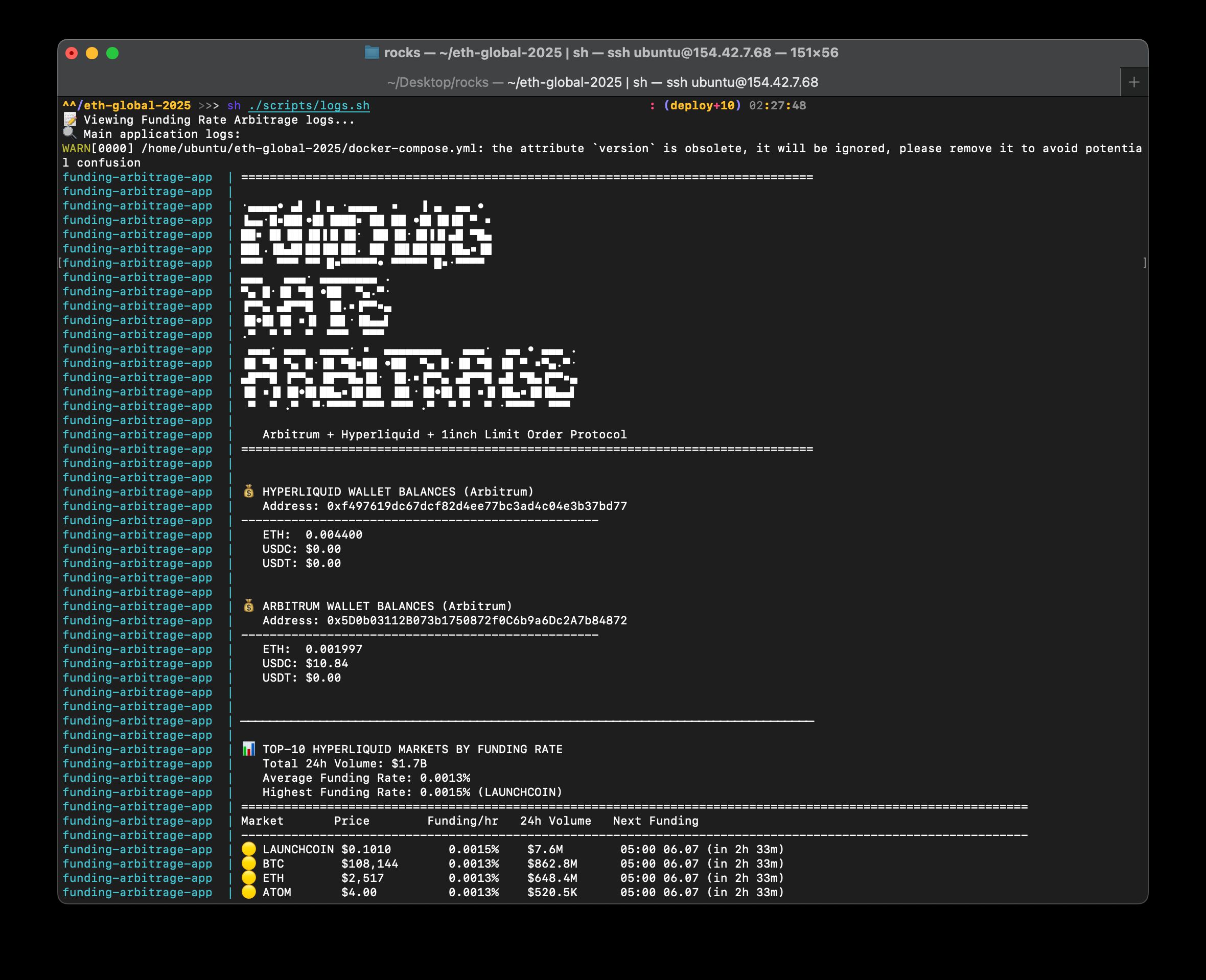
Finally, consider the operational costs. API usage fees, withdrawal fees, and potential slippage can erode your arbitrage spread. Before committing capital, run a cost-benefit analysis using historical data. Tools like CoinGlass or similar data aggregators can help you visualize funding rates and liquidity depth, allowing you to make data-driven decisions about which exchanges and assets offer the most sustainable opportunities.
Finding the Right Opportunities
Identifying profitable funding arbitrage opportunities requires more than just spotting a high rate; it demands a disciplined approach to data monitoring and historical analysis. You need to distinguish between temporary spikes and sustainable yield. A rate that is unusually high might indicate a short squeeze or a fleeting liquidity event, which can vanish before you can execute your trade. Conversely, a consistently positive rate suggests a structural imbalance where longs are willing to pay shorts a premium to maintain their positions.
Start by monitoring real-time data across major exchanges. Platforms like Binance and Hyperliquid often show significant funding differentials for the same asset. For instance, BTC and ETH might have different funding rates on these two platforms due to varying levels of leverage and market sentiment. By tracking these live rates, you can identify arbitrage windows where the spread is wide enough to cover trading fees and still generate profit. Use a PriceWidget to keep an eye on the current market price and funding rate simultaneously, ensuring you have the latest data before making a move.
Historical analysis is equally important. Look at the funding rate history for specific assets to understand their typical behavior. Some tokens might have high funding rates during bull markets but drop to negative or near-zero during bear markets. By understanding these patterns, you can better predict whether a current high rate is likely to persist. This helps you avoid getting caught in a "trap" where the rate spikes briefly before reversing, leaving you with a losing position.
When selecting assets for funding arbitrage, focus on those with high trading volume and liquidity. This ensures that you can enter and exit positions quickly without significant slippage. Additionally, consider the correlation between the assets you are trading. If you are arbitraging between two correlated assets, a sudden market move could affect both positions similarly, reducing the effectiveness of your hedge. Always prioritize assets with clear, transparent data sources to minimize counterparty risk.
Finally, keep an eye on broader market trends and news events. Major announcements, such as regulatory changes or technological upgrades, can cause sudden shifts in funding rates. By staying informed and using data-driven decision making, you can navigate these fluctuations and identify opportunities that offer sustainable yield. Remember, the goal is not just to find high rates, but to find stable, predictable opportunities that align with your risk tolerance and investment strategy.
Monitoring and Automation Tools
Running a funding arbitrage strategy manually is like trying to catch rain in a sieve. The rates change every eight hours, and by the time you log into an exchange, the opportunity might have evaporated or the spread has narrowed. To make this work at scale, you need software that watches the markets and executes trades while you sleep.
The goal here isn't just to automate the trade, but to automate the research. You need a stack that tracks funding rates across multiple venues—like Binance, Bybit, or Hyperliquid—and alerts you when the math works. Without this infrastructure, you are trading blind against algorithms that react in milliseconds.
Comparing Automation Platforms
Not all bots are built the same. Some are simple alert systems, while others are full execution engines. The table below breaks down the main types of tools you will encounter, focusing on what they actually do for your workflow.
| Tool Type | Primary Function | Setup Difficulty | Best For |
|---|---|---|---|
| Rate Trackers (e.g., Coinglass) | Aggregates rates across exchanges | Low | Initial research and screening |
| Alert Bots (e.g., Telegram) | Notifications when rates hit thresholds | Low | Passive monitoring |
| Execution Bots (e.g., 3Commas) | Auto-exchanges spot for futures | Medium | Active traders managing multiple positions |
| Custom Scripts (Python/API) | Tailored logic for specific arb strategies | High | Developers needing precise control |
Building Your Monitoring Stack
Start with a data aggregator. You don't need to buy expensive software yet. Use free or low-cost tools to map out which tokens consistently show high funding rates. Look for stability; a token that spikes once and vanishes is a trap, not an opportunity. Once you identify a pattern, move to alerting. Set up notifications for specific tokens or rate thresholds so you can decide whether to enter the trade manually or let a bot handle it.
Risk Management and Pitfalls
Funding rate arbitrage is not risk-free. While the strategy aims for market neutrality, real-world frictions can erode profits or cause significant losses. The primary threats come from exchange insolvency, smart contract vulnerabilities, and sudden funding rate reversals.
Exchange Solvency and Counterparty Risk
Your biggest risk is often the platform holding your funds. If an exchange collapses, your arbitrage position becomes worthless. This was evident in the FTX collapse, where many arbitrageurs lost their entire capital despite having "safe" hedged positions. Always prefer regulated, well-capitalized exchanges with transparent proof-of-reserves. Never leave more capital on a single exchange than you can afford to lose.
Smart Contract and Platform Risks
Even on reputable platforms, technical failures occur. Smart contract bugs or exchange outages during high volatility can prevent you from closing positions. For example, during extreme market moves, exchanges may halt withdrawals or liquidate positions at unfavorable prices. Use reputable, audited platforms and maintain sufficient margin to avoid forced liquidations. Consider using decentralized exchanges for part of your strategy to diversify counterparty risk.
Funding Rate Reversals
Funding rates are not static. They can reverse quickly, turning a profitable position into a losing one. A rate that looks attractive today might flip negative tomorrow due to market sentiment shifts. Monitor funding rates closely and have exit strategies in place. Diversify across multiple assets and exchanges to reduce exposure to any single rate movement.
Key Takeaways
- Verify exchange solvency before depositing funds.
- Monitor funding rates for sudden reversals.
- Diversify across platforms to mitigate counterparty risk.
- Maintain adequate margin to avoid forced liquidations.
Frequently asked: what to check next
Helpful gear
Use these product recommendations as a starting point, then choose the size, material, and price point that fit how you actually use the gear.


As an Amazon Associate, we may earn from qualifying purchases.
No comments yet. Be the first to share your thoughts!