How funding rate arbitrage works
Funding rate arbitrage is a delta-neutral strategy that profits from the periodic payments exchanged between long and short traders on perpetual futures contracts. The core mechanic is simple: you buy the underlying asset on the spot market and simultaneously open an equal-sized short position on the perpetual futures market. Because your positions offset each other, your exposure to the asset's price movement is neutralized. You aren't betting on whether Bitcoin will go up or down; you are betting on the cost of borrowing to maintain those leveraged positions.
The funding rate exists as a convergence mechanism to keep the perpetual contract price anchored to the spot price. In traditional markets, futures contracts have an expiration date, and as that date approaches, the futures price naturally gravitates toward the spot price. Perpetual contracts never expire, so exchanges invented the funding rate to serve that same purpose. When more traders are long, the price of the perpetual tends to trade at a premium to spot. To correct this, longs pay shorts. When the market is heavily shorted, the perpetual trades at a discount, and shorts pay longs.
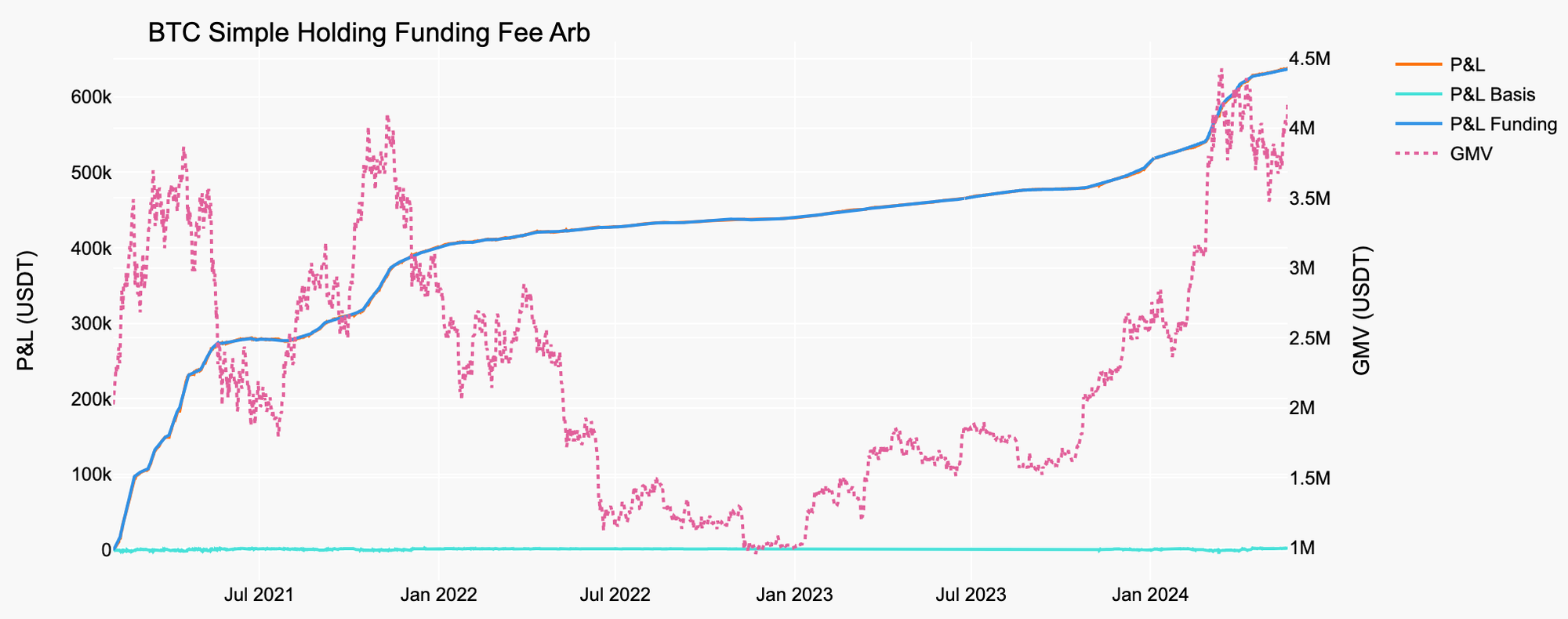
In a funding arb setup, you hold the short position on the perpetual. Therefore, you collect the funding payment whenever the rate is positive. This payment is typically distributed every eight hours. The goal is to find assets where the funding rate remains consistently positive, allowing you to earn a yield on your capital without taking on directional market risk. This dynamic turns the perpetual futures market into a lending market, where you are effectively lending the asset to leveraged traders.
Understanding this mechanic requires looking at real-time data. Funding rates are not static; they fluctuate with market sentiment and volatility. A rate might be positive one day and negative the next if market conditions shift rapidly. Successful arbitrageurs monitor these rates closely to ensure they are not collecting payments from a market that is about to flip. The strategy relies on the persistence of the premium, not just a single snapshot in time. By maintaining a delta-neutral position, you isolate the funding yield as your primary source of return, decoupling your performance from the broader crypto market's direction.
The infrastructure has shifted
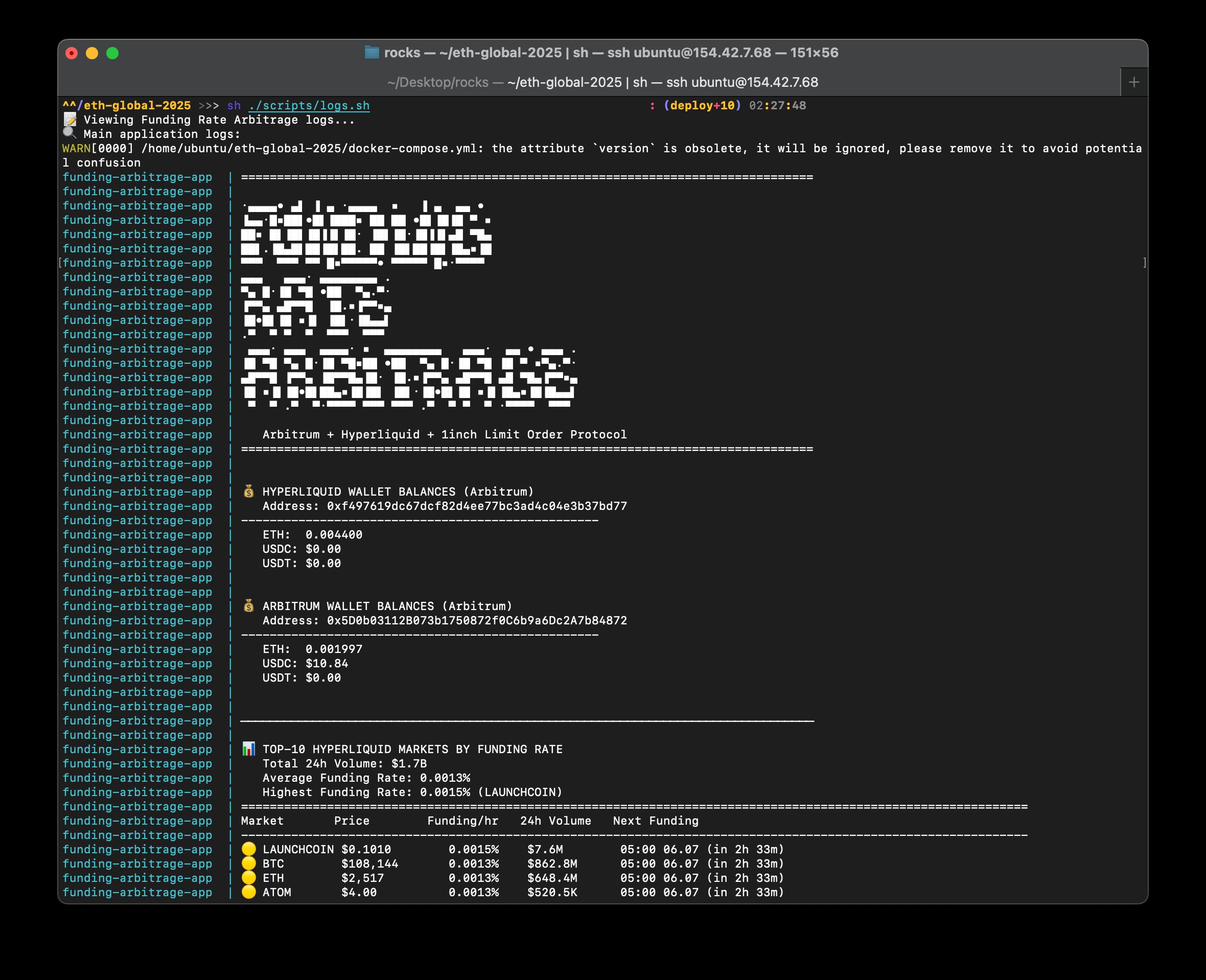
Funding rate arbitrage used to be a game of patience and manual spreadsheets. Today, it is a high-frequency infrastructure battle. The rise of perpetual DEXs like Hyperliquid has fundamentally altered the landscape, introducing settlement frequencies and latency requirements that manual CEX strategies simply cannot match. What was once a slow-moving yield play has become a race for real-time data execution.
The core mechanic remains the same: capturing the spread between spot and perpetual prices. However, the delta-neutral mechanics now demand precision. Old methods relying on hourly or daily funding intervals are too slow. Capital efficiency now depends on catching micro-movements in rates before the market corrects. If you are still manually checking rates every few hours, you are likely trading against bots that have already priced in the opportunity.
This shift has created a new divide. Traders using legacy tools find themselves lagging behind those leveraging direct API connections and low-latency infrastructure. The gap isn't just about speed; it's about the ability to monitor multiple venues simultaneously. Without real-time data feeds, you are essentially trading blind, exposing your delta-neutral position to unexpected basis risk.
The infrastructure required to compete today is less about complex algorithms and more about connectivity. You need tools that can ingest funding rate updates across CEXs and DEXs in milliseconds. The delta in your favor is no longer just the rate itself, but the speed at which you can act on it.
Best real-time analysis tools
Funding Arb works best as a sequence, not a scramble through settings. Do the minimum first: confirm compatibility, connect the core hardware, update only when needed, and test the result before adding optional features. That order keeps the task understandable and makes failures easier to isolate. After each step, pause long enough for the interface to finish syncing. Many setup problems are timing problems disguised as configuration problems. If the same step fails twice, record the exact error, restart the smallest affected piece, and retry before moving deeper.
The simplest way to use this section is to keep the setup small, verify each change, and record the stable configuration before adding optional accessories.
High-yield delta-neutral strategies
Funding Arb works best as a clear sequence: define the constraint, compare the realistic options, test the tradeoff, and choose the path with the fewest hidden costs. That order keeps the advice usable instead of decorative. After each step, pause long enough to check whether the recommendation still fits the reader's actual situation. If it depends on perfect timing, unusual access, or a best-case budget, include a simpler fallback.
The simplest way to use this section is to write down the real constraint first, compare each option against it, and choose the path that still works outside ideal conditions.
Risk management and execution checklist
Funding rate arbitrage looks clean on paper, but execution is where strategies get liquidated. Slippage, exchange outages, and smart contract vulnerabilities can erase months of collected premiums in a single block. You need a concrete checklist to catch these risks before they become PnL losses.
Never assume an exchange will honor your position. Check recent withdrawal logs and community status pages for delays. If the exchange is experiencing high latency or downtime, your hedge might fail to rebalance, leaving you exposed to directional risk.
A high current rate doesn't guarantee future payments. Look at the historical trend on CoinGlass or similar aggregators. Avoid entering if the rate has spiked recently and is likely to revert. You want consistent, structural premiums, not one-off anomalies.
Enter positions during high liquidity windows to minimize slippage. If the order book is thin, your entry price might drift significantly, breaking your delta-neutral setup. Set strict slippage limits (e.g., 0.1%) and cancel orders if they aren't filled instantly.

If you're using DeFi protocols for your hedge, audit the contract's history. Check for past exploits or high-risk parameters. A bug in the lending or perpetual contract can lead to total loss of funds, regardless of how good your arb looks.
Use tools like CoinGlass or custom scripts to alert you on funding rate changes, liquidation prices, or network congestion. Real-time data is your best defense against sudden market moves that could unravel your hedge.
Execution is only as good as your risk management. A disciplined checklist keeps you safe from the invisible threats that lurk in every trade.
Funding Rate Arbitrage FAQ
Funding rate arbitrage is a delta-neutral strategy, meaning your primary risk isn't market direction but execution and data accuracy. You profit from the spread between perpetual futures and spot prices, not from the asset appreciating. To succeed, you must monitor real-time data and manage the mechanics of opening both legs of the trade simultaneously.
How often are funding payments distributed?
Most major exchanges distribute funding payments every 8 hours. However, some platforms use 1-hour or 4-hour intervals. Always check the specific exchange rules, as missing a payment window can impact your annualized return.
What happens if the funding rate becomes negative?
If the funding rate turns negative, short positions pay long positions. Since you are short on futures, you would now be paying the funding fee instead of receiving it, potentially eroding your profits or causing a loss. This is why monitoring and exiting when rates drop is crucial.
Can I use this strategy on decentralized exchanges (DEXs)?
Yes, DeFi platforms like dYdX or GMX offer perpetual contracts. The mechanics are similar, but you must account for gas fees and smart contract risks. DeFi funding rates can be more volatile than centralized exchanges, offering higher potential yields but with greater complexity.
Is funding rate arbitrage safe?
"Safe" is relative in crypto. While the strategy is delta-neutral, it is not risk-free. The primary risks are exchange counterparty risk (if the exchange fails), smart contract risk (if using DeFi protocols), and basis risk (if the spread widens unexpectedly against you). Additionally, you must ensure your positions are perfectly hedged; any imbalance exposes you to market direction. It is a sophisticated strategy requiring active monitoring, not a set-and-forget passive income stream.
What data is critical for execution?
Real-time funding rates are essential. You cannot rely on static or delayed data because rates can flip from positive to negative in minutes during high volatility. You need access to live data feeds to identify assets with sustained positive funding rates and to execute trades before the rate changes. Amberdata and other professional data providers emphasize that robust, real-time data is key to identifying these opportunities and avoiding "funding traps" where rates are artificially high due to low liquidity.
Helpful gear
Use these product recommendations as a starting point, then choose the size, material, and price point that fit how you actually use the gear.


As an Amazon Associate, we may earn from qualifying purchases.
No comments yet. Be the first to share your thoughts!